

Health Signal
When Your Cat Suddenly Walks Past the Bowl
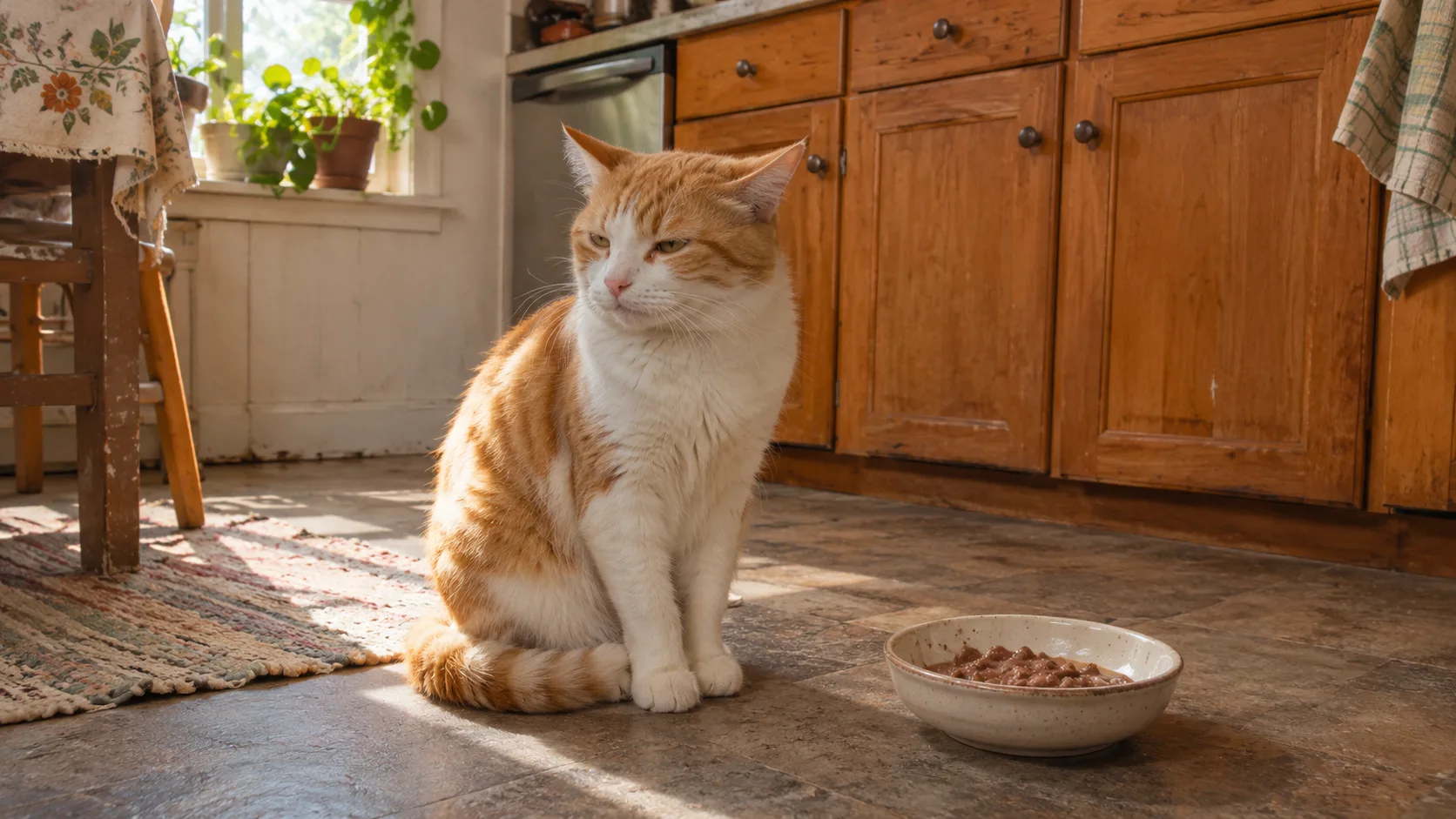
Same bowl as yesterday. Today they walked right past it.
A single skipped meal can be a passing mood or a hairball. Refusing food for 24 to 48 hours (especially alongside hiding or litter changes) requires structured observation and timely veterinary care.
What to do, stage by stage
Hours 0–24
Pin down the last confirmed meal and check the whole picture
Before rotating through five different treat bags, establish when your cat last ate a full portion and whether anything else changed at the same time.
- Write down the last time you saw your cat finish a meal, not just sniff the bowl and walk away.
- Check the litter box for urine clump size, stool consistency, or signs of repeated trips with little output.
- Look at how your cat eats: sniffing food, walking up hungry, then dropping kibble or turning away often points to dental pain or nausea rather than pickiness.
- Keep the room calm and avoid introducing new foods or noisy household changes while you assess.
Physical and posture cues to check right away
- Facial tension on the Feline Grimace Scale: flattened ears, squinted eyes, tense muzzle, forward whiskers, or a lowered head.
- Whether your cat is resting in their normal open spots or retreating behind furniture.
Hour 24–48 Triage
Separate a 24-hour watch from a same-day veterinary visit
Unlike dogs, cats cannot safely fast for several days. When a cat stops eating, the body mobilizes fat stores to the liver rapidly, creating a risk of hepatic lipidosis.
- Contact your veterinarian the same day if food refusal reaches 24 hours with lethargy or hiding, and never wait past 48 hours of complete fasting.
- Check whether anyone in the house left string, ribbon, hair ties, lilies, or human medication within reach.
- Film a 20-second clip of your cat’s breathing, posture, and reaction at the food bowl to show your vet.
Information your vet will ask for on the phone
- Exact hours since last normal meal, water intake trend, and latest urination/defecation.
- Any recent diet switch, vaccine, visitor, renovation noise, or conflict with another pet.
Context Check
Look for oral pain, nausea, or a blocked feeding route
Many cats labeled “suddenly picky” are actually dealing with a painful tooth, mild nausea, or another pet guarding the hallway to the kitchen.
- Watch from a distance at mealtime: does your cat chew on one side, paw at their mouth, or drool slightly?
- In a multi-cat home, place a second food and water station in a separate room so one cat cannot quietly block access.
- Check the bowl itself: swap deep plastic bowls (which can press against sensitive whiskers) for a wide, shallow ceramic dish.
Subtle patterns that point to the cause
- Approaching the bowl eagerly, sniffing, and lip-licking or swallowing repeatedly (a classic sign of nausea).
- Eating wet food or broth while refusing hard kibble (often oral or dental discomfort).
Recovery & Follow-Through
Encourage eating safely without force-feeding
Once urgent causes are addressed with your vet, gentle sensory adjustments help a recovering cat restart their appetite.
- Warm wet food slightly to body temperature (around 38°C / 100°F) to release aroma, testing with your wrist first.
- Offer small, fresh portions three or four times a day and remove uneaten wet food after 30 minutes so the smell stays appealing.
- Never syringe-feed or force food into a cat’s mouth unless instructed by a veterinarian, as forced feeding risks aspiration pneumonia and food aversion.
Tracking recovery over the next 7 days
- Weigh your cat weekly on a kitchen or baby scale; even a 5–10% drop in body weight is clinically meaningful.
- Watch whether post-meal grooming and normal sleep locations return alongside appetite.
When to call a vet vs. when to keep watching
Go to a veterinarian immediately if refusal pairs with
- Zero food intake for 48 hours (or 12–24 hours in kittens and overweight cats)
- Repeated vomiting, yellow bile, diarrhea, or black/bloody stool
- Straining in the litter box or no urine output (life-threatening in male cats)
- Labored or open-mouth breathing, pale or yellow gums, or sudden collapse
Situations where a 12–24 hour close watch is reasonable
- Skipping one meal while staying bright, alert, playful, and drinking normally
- Eating slightly less during the first two days of a gradual diet transition
- Mild, temporary appetite dip for a few hours after a vet visit or houseguest
- Turning down dry kibble while still finishing their normal wet food portion
Walk into the vet clinic with a 72-hour timeline instead of a guess.
When you notice an untouched bowl after work, the hardest question from the vet is “When did this start, and what else changed?” Most of the clues, such as nighttime vomiting, fewer trips to the water bowl, or hiding under the bed all afternoon, happened while you were away.
8g Satin Collar
Flags when daytime rest turns into unusual stillness
Separates a normal afternoon nap from a multi-day drop in movement, grooming, and nighttime activity before appetite disappears completely.
Continuous activity & rest baseline
UFO Home Hub
Connects the untouched bowl to what happened hours earlier
Links feeding-zone visits, litter trips, and earlier events (such as chewing a stray object or being blocked by another cat) so you can review the exact clip.
Event linking · Local video clues
AI Cat Behaviorist
Organize what you see before calling the clinic
Describe the appetite change or upload a photo of your cat’s resting posture to get a structured list of questions and observations for your vet.
Structured symptom & posture notes
Free structured observation check
8g collar + UFO Home Hub
What to have ready at each step
1 / 3
First 24 hours
Gather clean facts before changing everything
- Note the exact hour of the last finished meal
- Check litter box for urine clump count and stool quality
- Inspect mouth behavior (dropping food, lip-licking, drooling)
- Check the house for chewed strings, plants, or spilled items
2 / 3
Before the vet visit
Bring evidence that speeds up diagnosis
- Current body weight compared with last month’s weight
- List of all foods, treats, and supplements given this week
- 15–30 second video of posture, breathing, or behavior at the bowl
- 48-hour log of hiding spots, water intake, and litter visits
3 / 3
During recovery
Support appetite without adding stress
- Wide, shallow ceramic dish to prevent whisker fatigue
- Wet food warmed gently to body temperature
- Quiet feeding corner separated from other pets
- Daily weight and meal-completion log
FAQ
How long can a cat safely go without eating?
An adult cat that has not eaten anything for 24 to 48 hours needs veterinary evaluation. After 48 hours without calories, cats begin mobilizing body fat to the liver faster than the liver can process it, which can trigger hepatic lipidosis (fatty liver disease), a serious medical emergency.
How do I tell if my cat is being picky or actually sick?
Look at energy, posture, and how they act at the bowl. A cat that walks up to food, sniffs, licks their lips, or drops pieces while also hiding more or grooming less is showing nausea or oral pain rather than pickiness. Any sudden refusal in a cat that normally eats well should be treated as a health signal first.
Should I syringe-feed my cat at home if they refuse a meal?
Avoid force-feeding or syringe-feeding unless your veterinarian demonstrates the technique and prescribes it. Forcing food into a nauseous or painful cat’s mouth can cause aspiration pneumonia and create long-term food aversion.
Why does my cat beg for food, sniff the bowl, and walk away?
Approaching the bowl hungry and then turning away is a classic sign of nausea (where the smell of food triggers stomach discomfort) or dental/oral pain (where chewing hurts). Check whether they can eat warm broth or smooth pâté, and schedule a veterinary exam.
Related reading for this moment
View all articlesBlog
Is My Cat Sick? 10 Subtle Signs You Might Be Missing
Ten early changes in appetite, water intake, grooming, and litter habits.
Blog
Why Your Cat Hides When Sick (And How Smart Tech Can Help)
Why cats retreat when unwell and how to monitor daytime hiding.
Blog
Cat Pain Face: How to Use the Feline Grimace Scale at Home
How to read ears, eyes, muzzle, whiskers, and head position for pain.
More real-life scenes
All 5 scenes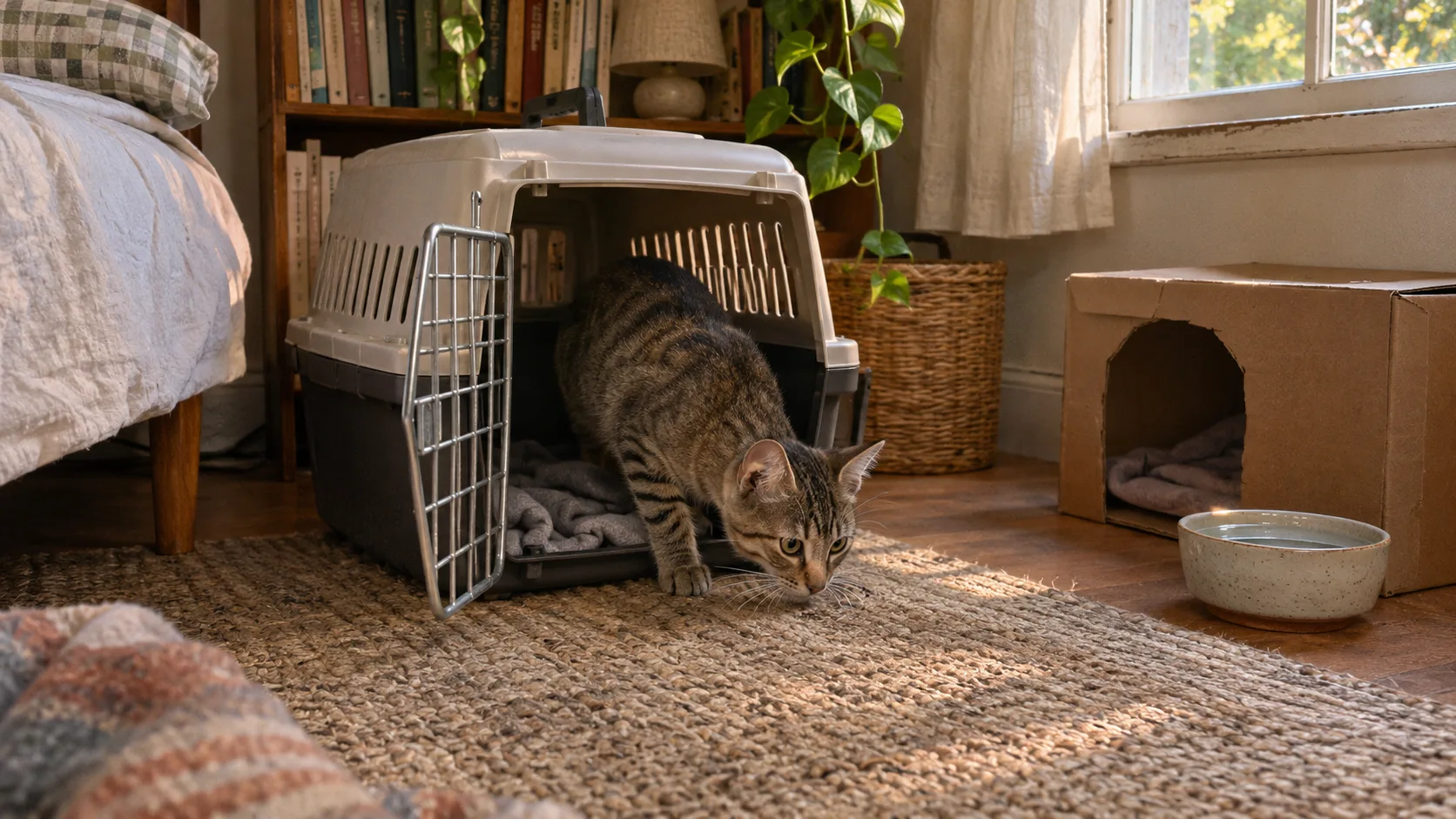
New Arrival
First Day Home
Everything is new today, for both of you.

Workdays & Travel
Leaving Home
A suitcase by the door, and a pair of eyes watching every trip to the closet.

Household Shift
New Family Member
The house is getting fuller, and your cat's territory is about to shift.
Senior Care
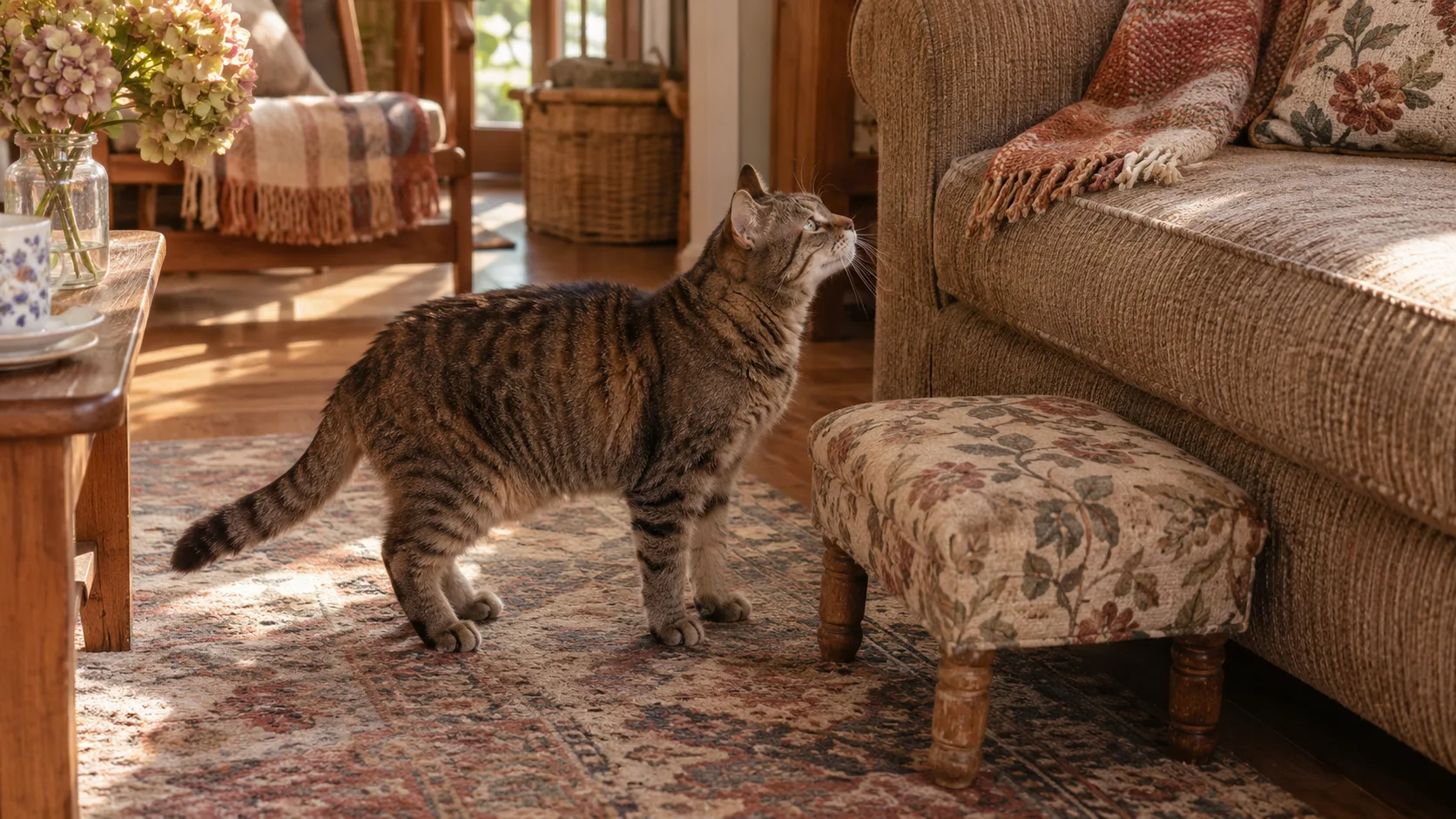
Aging Together
A half-second pause before the jump they used to make in their sleep.