

Senior Care
When They Pause Before the Jump They Used to Make in Their Sleep
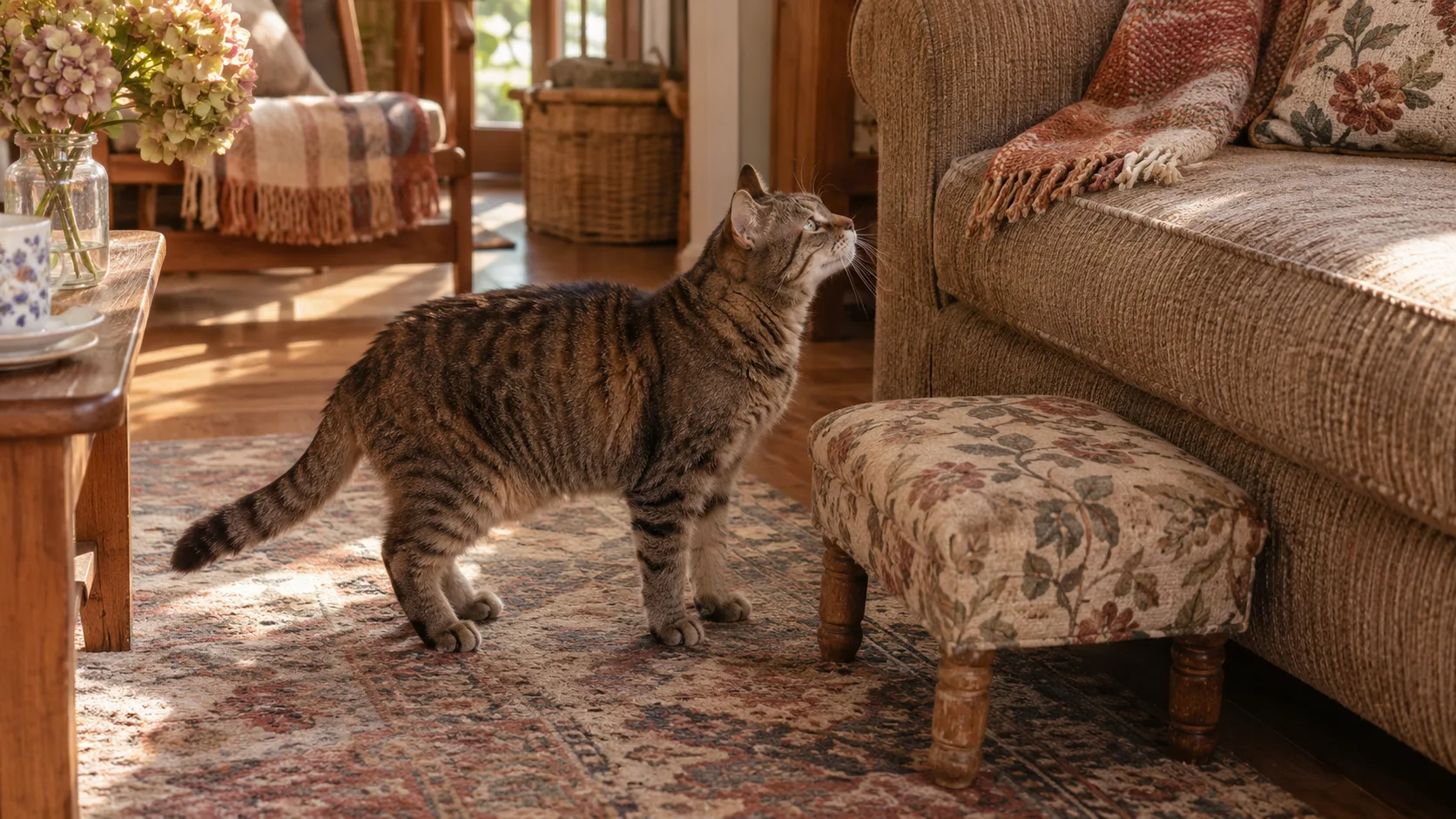
A half-second pause before the jump they used to make in their sleep.
Cats rarely limp or cry out when joints begin to ache or kidneys slow down. Aging shows up first in smaller daily choices: sleeping on a lower cushion, hesitating at the stairs, or waking five times a night to shift position.
What to do, stage by stage
Ages 10–11+ (Senior Transition)
Look for the activities that quietly disappeared
Owners often say “he got old overnight,” when in reality the cat has been gradually shrinking their daily radius for months to avoid movements that hurt.
- Compare today’s favorite resting spots with last year’s: did your cat trade the top of the bookshelf or window perch for a floor rug?
- Check the coat over the lower back, hips, and base of the tail for dandruff, oiliness, or small mats where turning to groom has become stiff.
- Weigh your senior cat once a month on a digital scale; gradual weight loss is often the earliest sign of chronic kidney disease, hyperthyroidism, or diabetes.
Subtle mobility cues worth filming for your vet
- Measuring a jump several times before leaping, pulling up with front claws instead of pushing cleanly with hind legs, or taking intermediate steps down from the bed.
- Stiff gait for the first few steps after waking up from a long nap.
Room & Access Setup
Make their familiar routes easier on stiff joints
A senior cat does not want a different home; they want their favorite places reachable without a painful landing.
- Add pet steps, a sturdy ottoman, or a carpeted ramp beside the sofa, bed, and favorite sunny windowsill.
- Swap at least one litter box for a wide, low-entry tray (entry lip under 3–4 inches); many senior “litter accidents” happen simply because stepping over a high plastic wall hurts arthritic hips.
- Lay non-slip runners along slick hardwood or tile hallways where hind legs can slide, and raise food and water bowls 2 to 3 inches off the floor.
Signs an environmental tweak worked
- Returning to a favorite bed or window perch within days of adding a step.
- Stepping cleanly into the low-entry litter box with all four paws instead of perching on the rim.
Nighttime & Rest Quality
Separate deep rest from fragmented senior sleep
“Older cats just sleep more” is one of the most common myths in cat care. Often, senior cats are not sleeping more deeply; they are waking repeatedly because joints ache or nighttime disorientation sets in.
- Provide a supportive, warm orthopedic bed in a draft-free corner on the main floor.
- Leave low nightlights near water bowls, litter boxes, and hallways to help cats with aging vision or early cognitive dysfunction orient at night.
- Keep daily play gentle and floor-based: two 5-minute sessions with a ribbon wand moved across the rug keep muscles engaged without high-impact jumps.
Nighttime patterns to share at checkups
- Restless shifting: lying down, waking 20 minutes later, changing posture, and repeating the cycle all night.
- New 2 a.m. or 4 a.m. yowling, which can point to hypertension, hyperthyroidism, pain, or cognitive decline.
Every 6 Months
Move from annual checkups to twice-yearly baseline reviews
Six months in a senior cat’s life equals roughly two to three human years, and early chronic conditions respond far better when caught before a crisis.
- Schedule wellness exams every 6 months including senior bloodwork (kidney values, SDMA, thyroid T4, liver enzymes), urinalysis, and blood pressure.
- Bring a 14-day home log and two 30-second videos (walking across a room and stepping onto the sofa) so your vet can assess mobility in a calm home setting rather than on a slick exam table.
- Discuss modern feline osteoarthritis pain management options with your vet, and never give human pain relievers (NSAIDs or acetaminophen), which are fatal to cats.
Key metrics to track between 6-month visits
- Monthly body weight, daily water-bowl frequency, and urine clump size.
- Changes in social greeting, touch sensitivity along the spine, and jumping height.
When to call a vet vs. when to keep watching
Contact your veterinarian promptly if your senior cat shows
- Sudden inability to use the hind legs, dragging a limb, or crying out in pain
- Noticeably increased thirst and larger or more frequent urine clumps
- Progressive weight loss despite a normal or ravenous appetite
- New nighttime yowling, staring at walls, head pressing, or sudden blindness
Gradual shifts to log over 14 days for your next vet visit
- Using the ottoman to reach the sofa instead of jumping straight from the floor
- Scruffy fur or mild dandruff over the lower back where grooming is harder
- Shorter play bursts followed by longer recovery naps
- Flinching or swishing the tail when brushed over the hips or lower spine
Hear the silent language of fragmented sleep and shrinking routines.
A senior cat with arthritis or early kidney disease still purrs on your lap and eats breakfast. The real clues (waking twelve times a night to shift off sore hips, visiting the water bowl more often, or giving up the window perch) accumulate too slowly to catch by memory.
8g Satin Collar
Captures sleep fragmentation and micro-shifts in activity
Tracks the difference between deep, restorative rest and restless overnight posture adjustments, while remaining light enough for a senior cat to wear comfortably 24/7.
Ultra-light 8g · Soft on aging fur & skin
UFO Home Hub
Notices when favorite heights and routines start to shrink
Logs changes in litter box visit frequency, time spent in the box, and hesitation before jumps so you can bring a 14-day evidence summary to your veterinarian.
Jump & litter-visit trend tracking
AI Cat Behaviorist
Review subtle posture and facial tension at home
Upload a photo or describe a change in your senior cat’s routine to organize a clear checklist before your clinic appointment.
Senior mobility & grimace check
8g satin collar + UFO Home Hub
Free home observation assistant
What to have ready at each step
1 / 3
Home comfort upgrades
Reduce joint strain today
- Low-entry litter box (under 3–4 inch lip) in an easy-to-reach room
- Steps or ottoman beside the bed, sofa, and favorite window
- Non-slip runners over slick hallway floors
- Raised ceramic food and water dishes (2–3 inches high)
2 / 3
14-day vet prep log
What to record before checkups
- Two 30-second home videos: walking and stepping onto furniture
- List of jumps or perches your cat used to use and now avoids
- Daily appetite, water intake, and urine clump size notes
- Locations on the body where brushing or touch causes tension
3 / 3
6-month clinic routine
Preventive senior screening
- Monthly home weight log brought to the appointment
- Senior blood panel (CBC, chemistry, SDMA, total T4)
- Urinalysis and blood pressure check
- Oral/dental exam and joint palpation review
FAQ
At what age is a cat considered a senior?
Veterinary guidelines (AAFP/ISFM) classify cats as mature from ages 7 to 10, senior from ages 11 to 14, and geriatric at 15 years and older. Because degenerative joint disease and kidney changes often begin quietly around ages 9 to 11, starting baseline tracking in the mature years pays off later.
My older cat doesn’t limp. Could they still have arthritis pain?
Yes. Because arthritis in cats usually affects joints on both sides of the body equally, cats rarely show a classic one-legged limp. Instead, feline osteoarthritis shows up as hesitation before jumping, sleeping in lower spots, matted fur over the hips, and irritability when picked up.
Why is my senior cat waking up and yowling in the middle of the night?
New nighttime vocalization in an older cat should always be checked by a veterinarian. Common causes include hyperthyroidism, high blood pressure, chronic joint pain that makes lying still uncomfortable, reduced night vision, and feline cognitive dysfunction.
Can I give my senior cat a tiny dose of human pain medication for stiff joints?
Never give a cat human pain medications such as acetaminophen (Tylenol), ibuprofen, or naproxen. Cats lack the liver enzymes needed to metabolize these drugs safely, and even a single tablet can cause fatal organ failure. Your veterinarian can prescribe feline-safe pain relief.
Related reading for this moment
View all articlesBlog
Is My Senior Cat Just Lazy, or Is It Chronic Pain?
How to distinguish routine aging from treatable joint and dental pain.
Blog
The Silent Language of Sleep: What Senior Cats Are Really Telling Us
Why senior cats experience fragmented rest rather than deeper sleep.
Blog
Cat Pain Face: How to Use the Feline Grimace Scale at Home
Five facial action units that help owners spot discomfort early.
More real-life scenes
All 5 scenes
New Arrival
First Day Home
Everything is new today, for both of you.
Health Signal
Suddenly Not Eating
Same bowl as yesterday. Today they walked right past it.

Workdays & Travel
Leaving Home
A suitcase by the door, and a pair of eyes watching every trip to the closet.

Household Shift
New Family Member
The house is getting fuller, and your cat's territory is about to shift.