

New Arrival
Bringing Your Cat Home: The First 48 Hours
Everything is new today, for both of you.
From the drive home to the end of the first night, these 48 hours set the foundation for how safe your cat feels in your space. Going slow now builds trust much faster than forcing contact.
What to do, stage by stage
Before you open the carrier
Start with one small basecamp room
A full house or apartment is too much territory to audit at once. A single quiet room with predictable corners lets a new cat map safety first.
- Place food, water, and an uncovered litter box in one quiet room before your cat arrives, keeping food and water well away from the litter box.
- Set up the open carrier and at least one low hiding box with a worn shirt that carries your scent.
- Check floor level for exposed cords, gaps behind appliances, and toxic plants such as lilies, pothos, or sago palm.
- If you already have another pet, keep the door closed and wait several days before starting scent swaps.
What to prepare for day-one observation
- Ask the shelter, foster home, or breeder for the exact food and litter brand they used so you change only one variable at a time.
- Note the time your cat last ate and used the litter box before leaving.
Hours 0–2
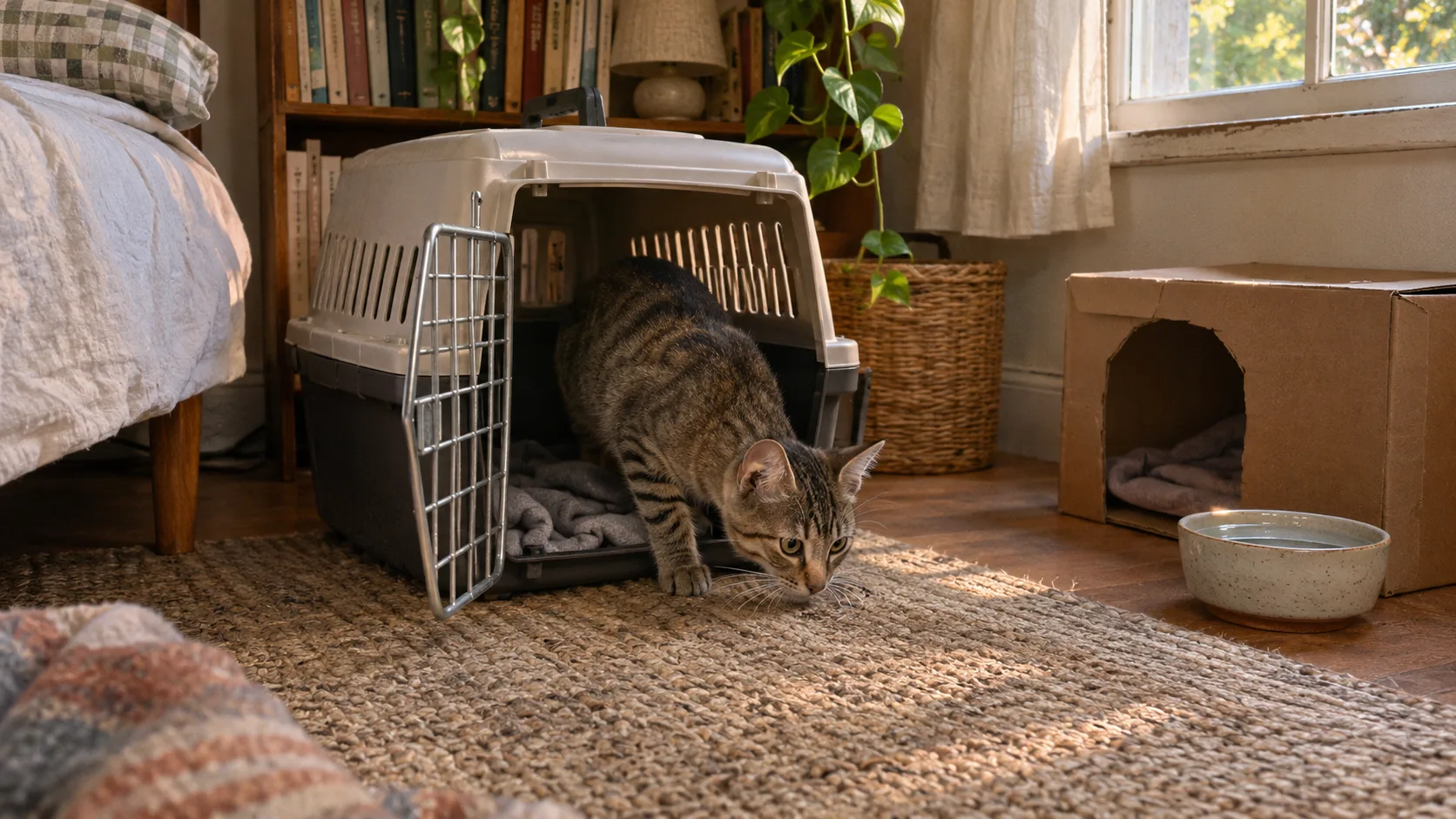
Open the carrier door and let them choose the pace
Every time a cat chooses to step out on their own counts more than ten attempts to pull them into your lap.
- Set the carrier on the floor near a hiding spot, open the door, and sit quietly across the room without staring or reaching in.
- Offer a small portion of their familiar food and fresh water within easy reach of their hiding place.
- Keep household voices low and hold off on inviting friends or extended family over to meet them.
What is normal in the first two hours
- Remaining inside the carrier or retreating immediately under a bed or sofa.
- Scanning the room with wide pupils, low posture, or sideways ears before settling into a corner.
Night 1
Expect nighttime exploration and soft calling
Cats often wait until the house goes dark and quiet to inspect a new territory for the first time.
- Leave a dim nightlight on so your cat can locate the litter box, water bowl, and hiding spots easily.
- If they meow at night, avoid rushing in immediately every time, which can turn anxious calling into a learned routine.
- Keep them in their basecamp room overnight rather than giving full-house access on night one.
Overnight signs that confidence is growing
- Food missing from the bowl or paw prints in the litter box by morning, even if the cat is back in hiding when you wake up.
- Brief quiet exploration between 1 a.m. and 5 a.m. once household footsteps stop.
Day 2 to Day 7
Watch the basics and start their individual baseline
Once eating and litter use start, your job shifts from emergency decompression to learning what normal looks like for this cat.
- Keep the same food for the first 7 to 10 days; if you switch diets later, blend the new food in gradually over 10 days.
- Use a wand toy at floor level to invite play from a distance before trying to pick them up.
- Schedule a baseline wellness exam with your veterinarian within the first week to record weight, dental status, and parasite prevention.
Baseline habits to note in week one
- Preferred resting height (under furniture vs. high perches), normal meal timing, and daily litter frequency.
- How quickly they recover after ordinary household sounds such as a vacuum or doorbell.
When to call a vet vs. when to keep watching
Call a veterinarian promptly if you see
- No food intake at all for more than 48 hours
- No urination for 24 to 36 hours, or repeated straining in the litter box
- Open-mouth breathing, panting, or persistent vomiting and diarrhea
- Complete listlessness where the cat does not react when you approach
Normal adjustment patterns you can monitor calmly
- Hiding under the bed during the day while eating and using the litter box overnight
- Mildly reduced appetite during the first 24 hours in a new home
- Soft nighttime meowing during the first two or three nights
- Allowing chin scratches one moment and retreating the next as they test boundaries
Know how they settle in without hovering over their hiding spot.
During the first week, walking into the room to check on a shy cat often sends them right back under the bed. Yet leaving the door closed leaves you guessing whether they ate, explored, or stayed frozen in one corner all night.
8g Satin Collar
Light enough to wear while building a day-one baseline
At just 8 grams with a soft woven satin band and silent operation, the collar records movement, rest bouts, and nighttime exploration without beeps or heavy hardware.
8 grams · Japanese satin · Magnetic breakaway
UFO Home Hub
Sees nighttime meals and litter trips in the dark
Observes when your new cat finally steps out at 2 a.m. to eat, drink, and stretch, processing video locally on the device so you can check morning summaries in peace.
Whisper-quiet servos · On-device AI · 4K night vision
AI Cat Behaviorist
Decode cautious postures while you get to know each other
Not sure whether a low crouch or sideways ear angle is normal decompression or fear? Upload a photo for an evidence-based breakdown.
Free instant posture & context reading
8g collar + UFO Home Hub
Upload a photo or describe day-one behavior
What to have ready at each step
1 / 3
Before pickup
Set up the basecamp room first
- Uncovered litter box with unscented clumping litter
- Ceramic or stainless bowls placed far from the litter box
- Cardboard hiding box or covered nook with your worn shirt
- Cord protectors and a check for toxic houseplants
2 / 3
First 48 hours
Keep the environment predictable
- Same food brand the shelter or foster home used
- Dim nightlight for overnight orientation
- Wand toy for distance play (hands are never toys)
- Log first meal time, first urination, and first stool
3 / 3
First 7 days
Establish health and routine baselines
- First wellness exam and weight check with your vet
- Pet insurance enrollment before pre-existing issues arise
- Gradual door-opening once the cat greets you confidently
- Baseline record of daily sleep spots and active hours
FAQ
Why shouldn’t I let my new cat explore the whole house on the first day?
Cats are territorial animals that feel safest when they can map a small, predictable space first. Opening the entire home immediately floods them with unfamiliar scents and hiding spots, which often prolongs hiding and litter box confusion. Starting in one room for 2 to 5 days builds confidence much faster.
My new cat has been hiding under the bed all day. Do they dislike me?
No. Hiding in a new environment is a normal self-protection instinct while your cat learns the sounds and routines of your home. Sit quietly in the room, read or work without staring at them, and let them initiate the first approach.
Should I switch my new cat to better food on day one?
Wait at least 7 to 10 days before changing food. Moving to a new home already stresses the gut microbiome, and an abrupt diet switch often causes diarrhea or food refusal. Transition over 10 days by mixing 25%, 50%, and 75% of the new food into the old.
When is hiding or not eating after adoption a medical emergency?
Many cats skip meals during their first 12 to 24 hours, especially overnight when the house is quiet. If your cat has not eaten anything for 48 hours, has not urinated in 24 to 36 hours, or shows vomiting, diarrhea, or labored breathing, contact a veterinarian promptly.
Related reading for this moment
View all articlesBlog
First-Time Cat Owner? 12 Mistakes That Could Cost You Thousands
From litter setup and hydration to early insurance and cat-proofing.
Blog
Kitten Behavior Guide: What Every New Cat Parent Needs to Know
Socialization windows, play biting, and 3 a.m. zoomies from week 1 to year 1.
Blog
Cat Body Language Decoded: The Complete Science-Based Guide
How to read ears, tail positions, pupil size, and posture together.
More real-life scenes
All 5 scenes
Health Signal
Suddenly Not Eating
Same bowl as yesterday. Today they walked right past it.
Workdays & Travel
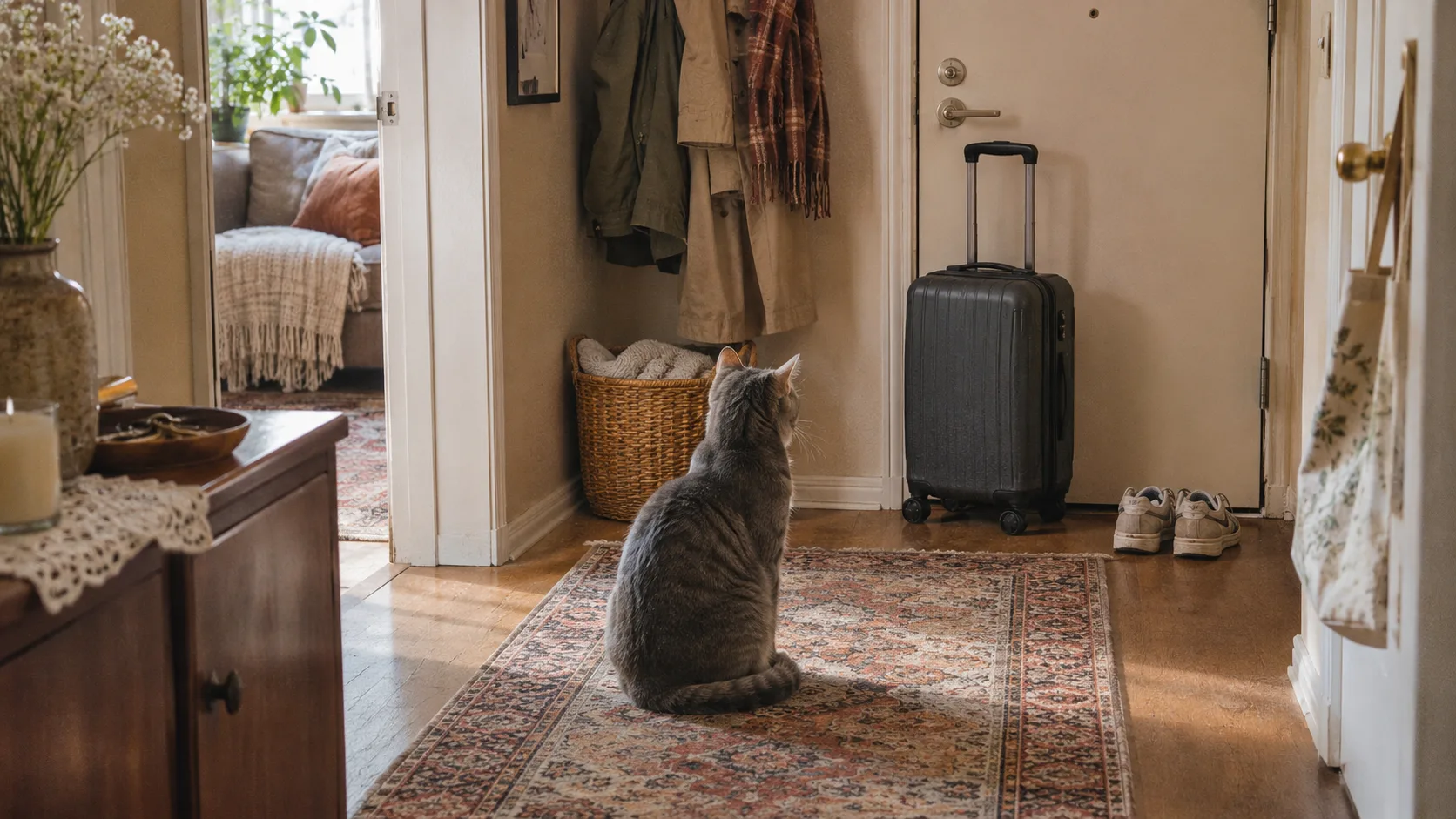
Leaving Home
A suitcase by the door, and a pair of eyes watching every trip to the closet.
Household Shift
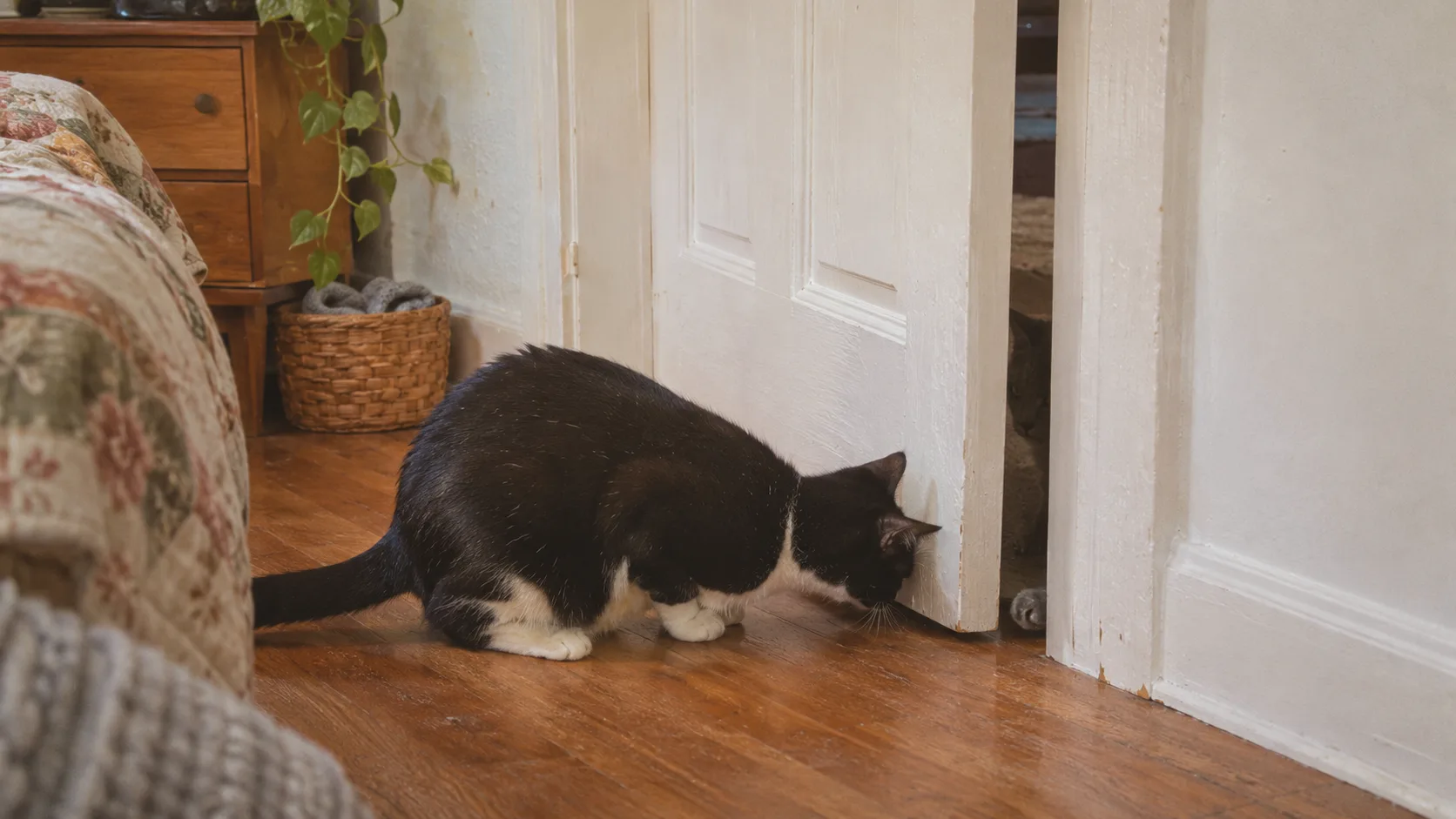
New Family Member
The house is getting fuller, and your cat's territory is about to shift.

Senior Care
Aging Together
A half-second pause before the jump they used to make in their sleep.