

Workdays & Travel
When You Have to Leave Them Home Alone
A suitcase by the door, and a pair of eyes watching every trip to the closet.
Whether you are returning to an office schedule or leaving for a weekend trip, cats notice the shift long before the front door closes. Predictable routines and clear visibility turn anxious guesswork into calm care.

What to do, stage by stage
Days Before Departure
Soften departure cues before your schedule changes
Cats learn the sequence that predicts an empty house: keys jingling, shoes by the door, or a suitcase coming out of the closet.
- Bring out luggage or work bags two or three days early and leave them open on the floor with a few treats nearby so they stop signaling an immediate departure.
- Practice low-key departure cues (picking up keys, putting on a jacket, then sitting back down on the sofa) so those sounds lose their tension.
- For any trip longer than 24 hours, arrange a trusted daily sitter rather than leaving extra bowls of food and hoping for the best.
Pre-departure signs of attachment sensitivity
- Shadowing you from room to room more tightly than usual or sitting inside the open suitcase.
- Vocalizing at the front door or hiding as soon as you put on shoes.
Departure Morning
Leave a calm, enriched territory rather than an empty room
An indoor cat with nothing to hunt, watch, or explore spends solo hours with nowhere to channel their energy.
- Run a 15-minute wand-toy play session followed by a meal 30 minutes before you leave, triggering the natural hunt-eat-groom-sleep cycle.
- Set out puzzle feeders or hide small dry treats along cat trees and window perches for afternoon foraging.
- Prop interior doors open with doorstops so your cat can never accidentally push a bathroom or bedroom door shut behind them.
- Keep your goodbye brief and matter-of-fact; long, emotional farewells raise arousal right as you walk out.
Safety checks before locking the door
- Unplug irons and space heaters, close toilet lids, and put away wand toys with long strings.
- Leave an extra water bowl in a second room in case one bowl is tipped over.
While You Are Gone
Tell a 20-minute protest apart from real separation distress
Many owners imagine their cat crying at the door for eight hours straight, when the reality is often much calmer, or occasionally more urgent.
- Check whether vocalizing or door-pacing stops within 20 to 30 minutes of your departure and transitions into normal daytime sleep.
- Ask your cat sitter to visit at the same clock hour each day so feeding and play stay anchored to your cat’s rhythm.
- Be cautious with two-way speaker calls: for some cats, hearing a disembodied voice without your scent or presence causes confusion rather than comfort.
What daytime records reveal while you are away
- Healthy solo routine: brief window watching, a mid-afternoon stretch, normal meal and litter visits, and long relaxed naps.
- Separation distress: hours of repetitive pacing, refusal to eat until you return, or urinating on clothing and beds that carry your scent.
The Return
Reset the routine calmly when you walk back in
How you return shapes how your cat handles the next departure.
- Greet your cat warmly with a slow blink and chin scratch once they settle, rather than rewarding frantic door-scratching with high-energy excitement.
- Check water bowls, food intake, and litter box output right away to confirm normal hydration and digestion during your absence.
- Finish the evening with a predictable play session and meal at their usual hour.
Post-trip recovery check
- Whether appetite, litter habits, and nighttime sleep return to baseline within 24 hours.
- Any hoarse voice, overgroomed patches, or stress-induced soft stool.
When to call a vet vs. when to keep watching
Intervene or consult your vet if solo hours trigger
- Refusing all food and water for the entire time you are away (24+ hours)
- Vomiting, diarrhea, or urinating outside the litter box during absences
- Overgrooming bald patches on the belly, inner thighs, or forelegs
- Continuous pacing and vocalizing that lasts for hours without settling into rest
Normal solo-time behaviors that do not need medical intervention
- Meowing at the door for 10 to 20 minutes after you leave, then curling up to nap
- Sleeping more during work hours and becoming extra playful when you get home
- Bringing a soft toy to the bedroom doorway overnight
- Following you from room to room for the first hour after you return
A sense of how they’re doing without staring at a live feed all day.
Standard pet cameras either miss your cat the moment they walk into another room or flood your phone with meaningless motion alerts. Instead of constant surveillance, you want to know whether your cat settled down, ate lunch, and felt safe while you were out.
8g Satin Collar
Continuous rhythm even when they nap out of camera view
Because the 8g collar stays with your cat, you still see restful sleep vs. restless pacing even when they curl up under the bed or in another room.
Follows your cat across every room
UFO Home Hub
Summarizes the day locally and runs scheduled play
Processes visual context on-device (deleting temporary raw video within an hour) and pairs with the detachable Beam Module for laser-and-treat hunting sessions.
360° pan · On-device privacy · Beam Module play
AI Cat Behaviorist
Tailor a solo-day routine to your cat’s temperament
Share your work hours and your cat’s departure reactions to get a step-by-step desensitization and enrichment plan.
Separation & enrichment planning
8g collar + UFO Home Hub + Beam Module
Free separation-anxiety check
What to have ready at each step
1 / 3
Workday away (8–10h)
Daily solo-time rhythm
- 15-minute play session + meal before you leave
- Puzzle feeder or hidden dry treats for midday foraging
- Window perch with a clear view outside
- Interior doors propped open so rooms cannot latch shut
2 / 3
Weekend trip (1–3 days)
Never leave a cat unmonitored >24h
- Daily drop-in cat sitter scheduled at a consistent hour
- Two separate water stations + backup litter box
- Written vet contact and emergency authorization for your sitter
- Worn t-shirt left in your cat’s favorite sleeping spot
3 / 3
Traveling with your cat
When they come with you
- Hard-sided or airline-approved carrier acclimated 2 weeks ahead
- Feliway spray applied to carrier bedding 15 minutes before departure
- Microchip registration and breakaway ID collar verified
- Portable litter tray and their exact home food brand
FAQ
Can I leave my indoor cat alone for a weekend with extra food and water?
Veterinarians strongly advise against leaving a cat completely unattended for more than 24 hours. A tipped water bowl, a closed door, or a sudden urinary blockage can become life-threatening within a single day. Always have a sitter check in at least once daily and use continuous home monitoring between visits.
Do cats actually get separation anxiety when owners go back to the office?
Yes. Controlled attachment studies (Vitale et al., 2019, Current Biology) show that roughly 65.8% of cats form secure attachment bonds with their caregivers. When a household shifts from all-day presence to 9-hour absences, many cats show vocalization, door-watching, or stress-related litter issues until a new routine is built.
Should I talk to my cat through a pet camera while I am at work?
Watch how your individual cat reacts first. Because cats rely heavily on scent and visual body language alongside voice, some cats become anxious searching for an owner they can hear through a speaker but cannot see or smell. Quiet observation is often calmer.
Is it better to board my cat or keep them at home with a sitter?
Because cats are deeply attached to their home territory, most healthy cats experience far less stress staying in their own home with a daily sitter than moving to an unfamiliar boarding facility.
Related reading for this moment
View all articlesBlog
Cat Separation Anxiety Is Real: Here's What the Research Says
Attachment science, pandemic-generation routines, and graduated desensitization.
Blog
Wearables vs Ambient Sensing: What Does Each Tell Us About Behavior?
Why a collar follows the cat across rooms while a hub captures the scene.
Research
Temporal alignment of camera, audio, and IMU streams
How Catellect aligns collar motion and room video into one inspectable moment.
More real-life scenes
All 5 scenes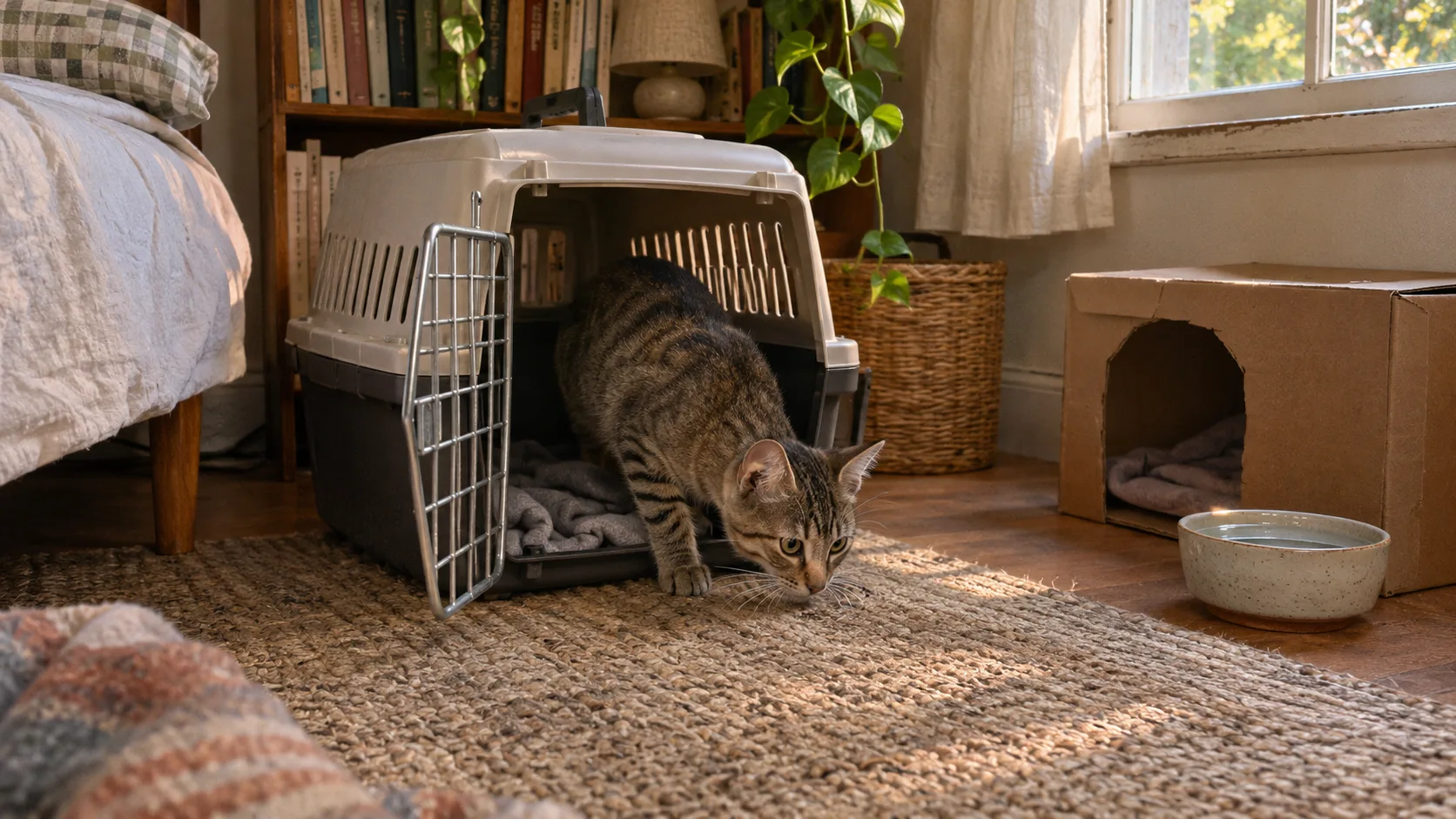
New Arrival
First Day Home
Everything is new today, for both of you.
Health Signal
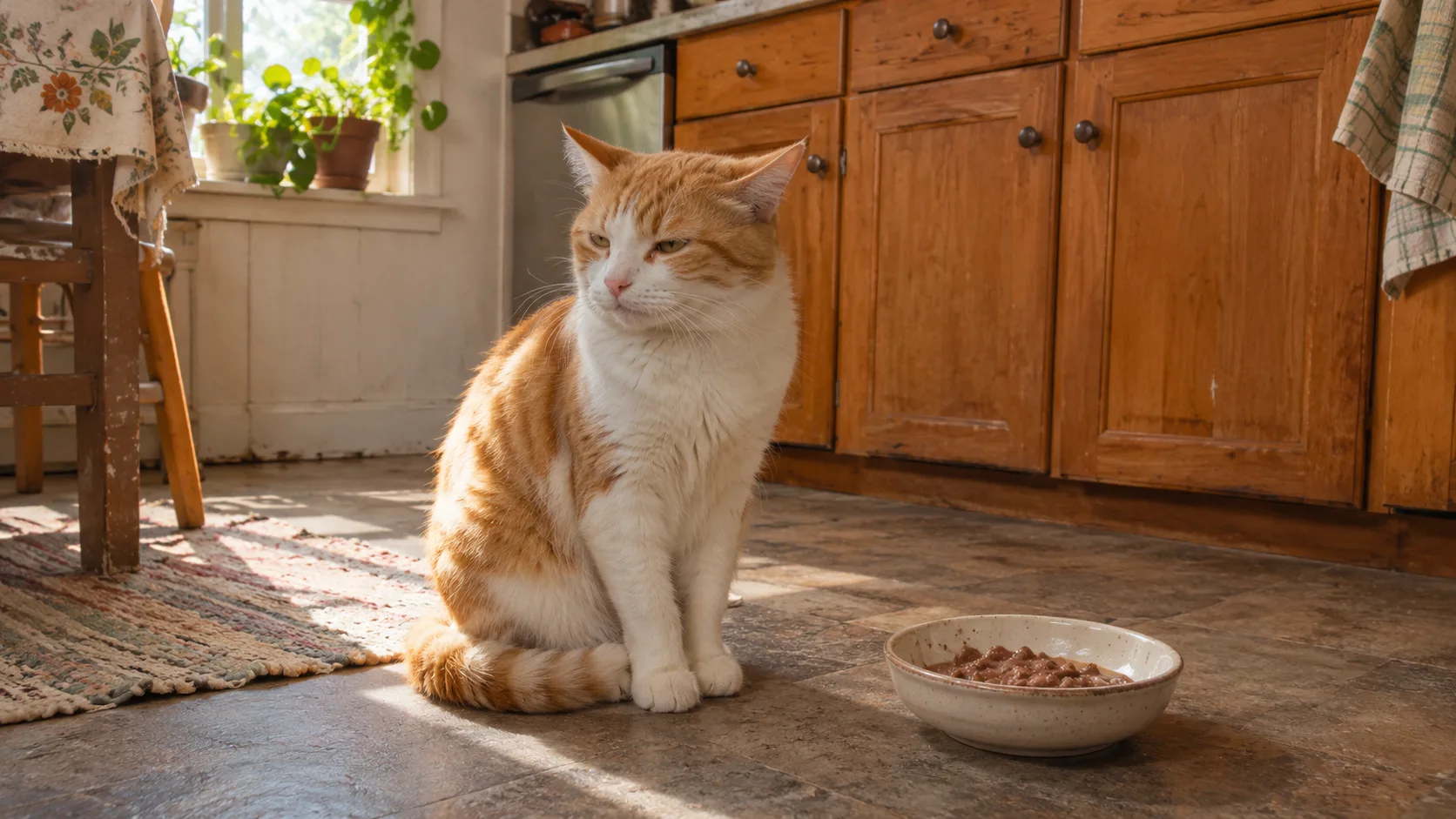
Suddenly Not Eating
Same bowl as yesterday. Today they walked right past it.

Household Shift
New Family Member
The house is getting fuller, and your cat's territory is about to shift.
Senior Care
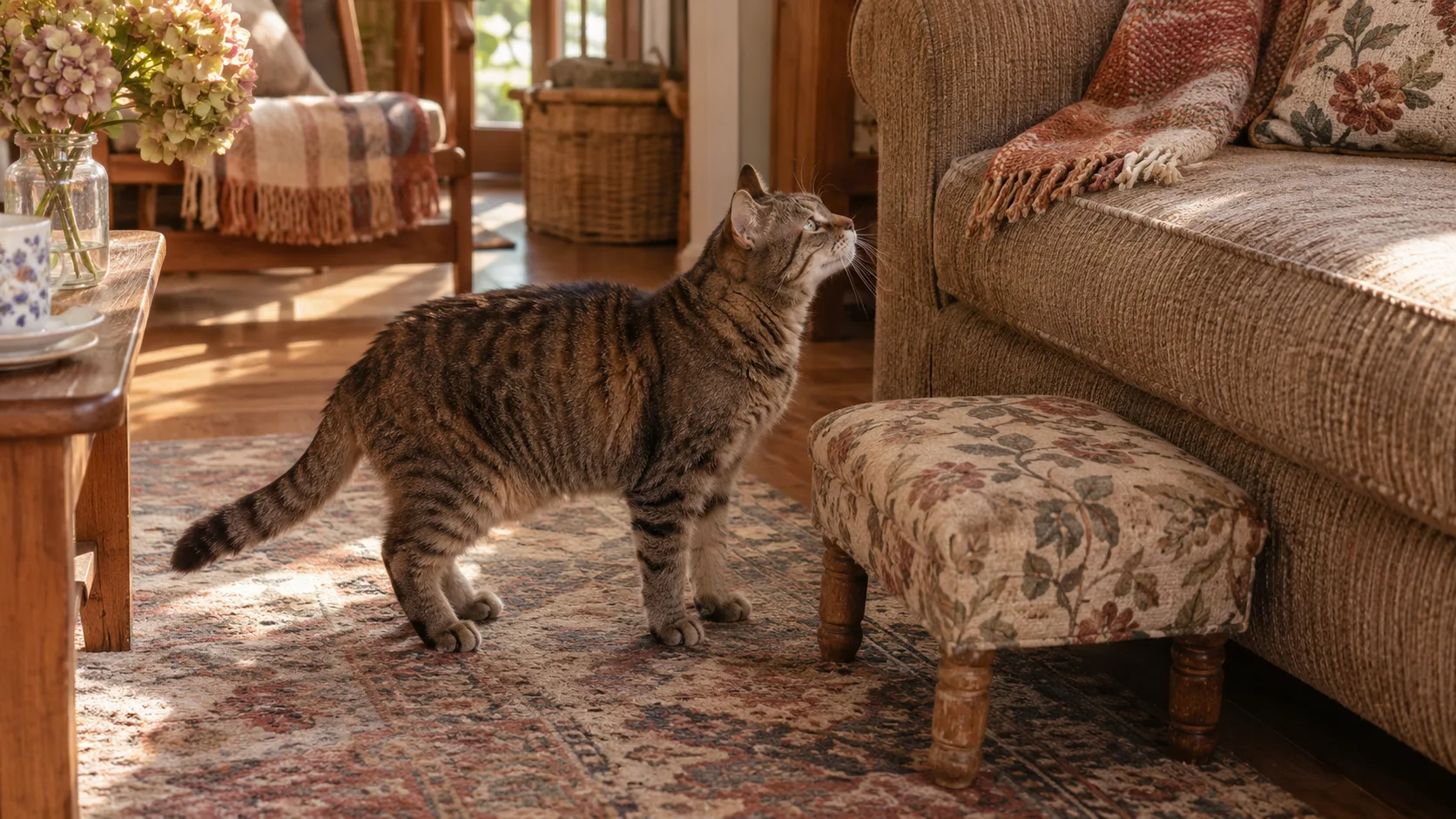
Aging Together
A half-second pause before the jump they used to make in their sleep.