

Household Shift
When Your Home Grows by One More
The house is getting fuller, and your cat's territory is about to shift.
Whether you are adopting a second cat, welcoming a baby, or moving in with a partner, your resident cat experiences the change as a territorial renegotiation. Protecting their routes and introducing scents first prevents months of silent conflict.

What to do, stage by stage
Days 1–7
Introduce scent long before anyone meets face to face
Cats identify family by shared colony scent rather than sight. Putting two unfamiliar animals in the same living room on day one triggers defensive threat responses.
- Give a new cat their own closed sanctuary room with separate food, water, litter, and perches for the first week.
- Swap clean socks or soft cloths gently rubbed along each cat’s cheeks (where facial pheromones sit) and place them near the other cat’s resting area.
- If preparing for a new baby or partner, set up new furniture and play recordings of new household sounds weeks ahead so the change is gradual.
Signs both sides are ready for the next step
- Sniffing the swapped cloth or the bottom of the closed door with forward ears and a relaxed body, then walking away calmly.
- Eating meals normally on both sides of the closed door without hissing or growling.
Days 7–14
Pair brief visual contact with high-value rewards
Once scent is familiar, let the cats see each other across a barrier only while something good is happening.
- Crack the door with a tall baby gate or screen and feed wet food or high-value treats on both sides, starting several feet back from the threshold.
- Keep visual sessions short (5 to 10 minutes) and close the door while both cats are still calm and eating.
- Keep your resident cat’s favorite daily play and cuddle slot unchanged so they do not associate the newcomer with losing your attention.
Warning signs to slow the timeline down
- Unblinking hard stares, crouched stalking posture, tail thrashing, or growling at the gate.
- If either cat refuses to eat near the barrier, move the bowls further back and stay at the scent-swapping stage for a few more days.
Week 2 Onward
Design the home so no single doorway can be monopolized
In multi-cat homes, most conflict is about corridors and bottlenecks rather than open floor space.
- Follow the N+1 resource rule: for two cats, provide three litter boxes, multiple water bowls, and separate feeding stations in different rooms.
- Add vertical lanes (cat trees, window shelves, or cleared bookcases) so one cat can pass above another without crossing paths on the floor.
- Avoid covered litter boxes in dead-end closets where one cat can sit outside and trap the other inside.
Where silent resource guarding hides
- One cat lying “casually” across the hallway leading to the laundry-room litter boxes.
- A cat who suddenly starts urinating on beds or rugs because walking past a housemate to reach the box feels unsafe.
Month 1+
Watch for quiet coexistence, not mandatory cuddling
Two cats do not need to groom each other in a sunbeam to have a healthy home; sharing rooms peacefully without tension is a complete success.
- Run parallel play sessions with two wand toys, or one person per cat, so predatory energy goes into toys rather than chasing a housemate.
- If a vet visit temporarily changes one cat’s smell, keep the returning cat in a separate room for a few hours and rub both cats with a shared towel to prevent non-recognition aggression.
Healthy multi-cat coexistence markers
- Alternating roles during play chasing, with ears forward, claws retracted, and no vocal screaming.
- Sleeping in the same room at different heights with loose posture and slow blinks.
When to call a vet vs. when to keep watching
Separate completely and consult a professional if you see
- Bite wounds, scratches, clumps of pulled fur, or screaming fights
- One cat hiding all day in a closet or refusing to come down from a shelf to eat or use the litter box
- Stress-induced urinary straining, blood in urine, or repeated house-soiling
- Relentless stalking where one cat is always the pursuer and the other always flees
Normal boundary-setting that does not mean a failed introduction
- A brief defensive hiss when one cat steps too close, followed by both cats turning away
- Taking turns using the living room at different hours of the afternoon
- Curious sniffing from a distance without physical cuddling
- Play wrestling where both cats pause, sit up, and switch who chases whom
Spot silent hallway blocking before it turns into a fight or a wet mattress.
Survey research shows intercat tension affects over 60% of multi-cat homes, yet the most damaging behaviors (fixed staring, doorway blocking, and midnight displacement) are completely silent and happen when you are out of the room.
Per-Cat 8g Collars
Knows which cat is resting and which cat is retreating
Each cat wears their own 8g collar while a single UFO Home Hub supports the household, tracking each cat’s activity, sleep fragmentation, and territory shrinkage separately.
Individual identity · Separate baselines
UFO Home Hub
Catches doorway stand-offs and litter-route blockages
Detects when one cat approaches the litter area, pauses at another cat blocking the hall, and turns back, explaining why an accident happened hours later.
Multi-pet interaction & path tracking
AI Cat Behaviorist
Tell rough play from real tension in seconds
Upload a photo or describe how your cats interact to get an ethology-backed reading of ears, tails, spacing, and next steps.
Play vs. conflict posture analysis
Upload a photo of your cats together
One UFO Home Hub + individual 8g collars
What to have ready at each step
1 / 3
Before day one
Set up separate territory
- Closed sanctuary room with its own food, water, and litter
- Tall baby gate or screen for upcoming visual sessions
- Feliway Friends / Optimum diffusers plugged into shared rooms
- Scent-swapping cloths or socks ready for cheek rubbing
2 / 3
Home layout audit
Prevent resource bottlenecks
- N+1 uncovered litter boxes placed in separate rooms
- Food and water stations with clear sightlines and two exits
- Vertical perches at different heights in the main living area
- No dead-end hallways leading to the only litter box
3 / 3
First month together
Build positive associations
- High-value treats reserved only for gate and shared-room sessions
- Two wand toys for simultaneous daily play
- Thick pillow or towel handy to interrupt a stare-down safely (never use bare hands)
- Weekly check of each cat’s weight and litter habits
FAQ
Why did my two bonded cats suddenly start fighting after a vet visit?
This is called non-recognition aggression. Because cats recognize housemates primarily by scent, a cat returning from the clinic carrying antiseptic and other animals’ smells can register as an intruder. Keep the returning cat in a separate room for several hours and rub both cats with a shared towel from home before reuniting them.
Is a single hiss during introductions a sign that my cats will never get along?
No. Hissing is a defensive distance-increasing signal that says “you are a little too close right now.” If one cat hisses and the other respects it by looking away or stepping back, they are communicating boundaries normally.
Why do three litter boxes in the same laundry room still count as one box?
To a cat, three boxes side by side in one room share a single entrance corridor. If a more confident cat naps in the hallway outside that room, a timid cat is blocked from all three boxes at once. Place boxes in genuinely separate zones of the home.
How do I tell if my cats are play-fighting or actually fighting?
Play fighting is quiet, roles alternate (both cats take turns chasing and pouncing), ears stay forward or neutral, and body posture loosens during pauses. Real aggression is one-sided, accompanied by flattened ears, puffed fur, growling or yowling, and avoidance for hours afterward.
Related reading for this moment
View all articlesBlog
Cats Fighting at Home? A Science-Based Guide to Multi-Cat Conflict
AAFP intercat tension guidelines, scent reintroductions, and silent blocking.
Blog
Why Does My Cat Hiss? 6 Causes and What to Do About Each
Why a hiss is a defensive request for space and how to respond without escalating.
Blog
Cat Peeing Outside the Litter Box? Here's What the Science Says
How territorial stress and litter box guarding trigger house soiling.
More real-life scenes
All 5 scenes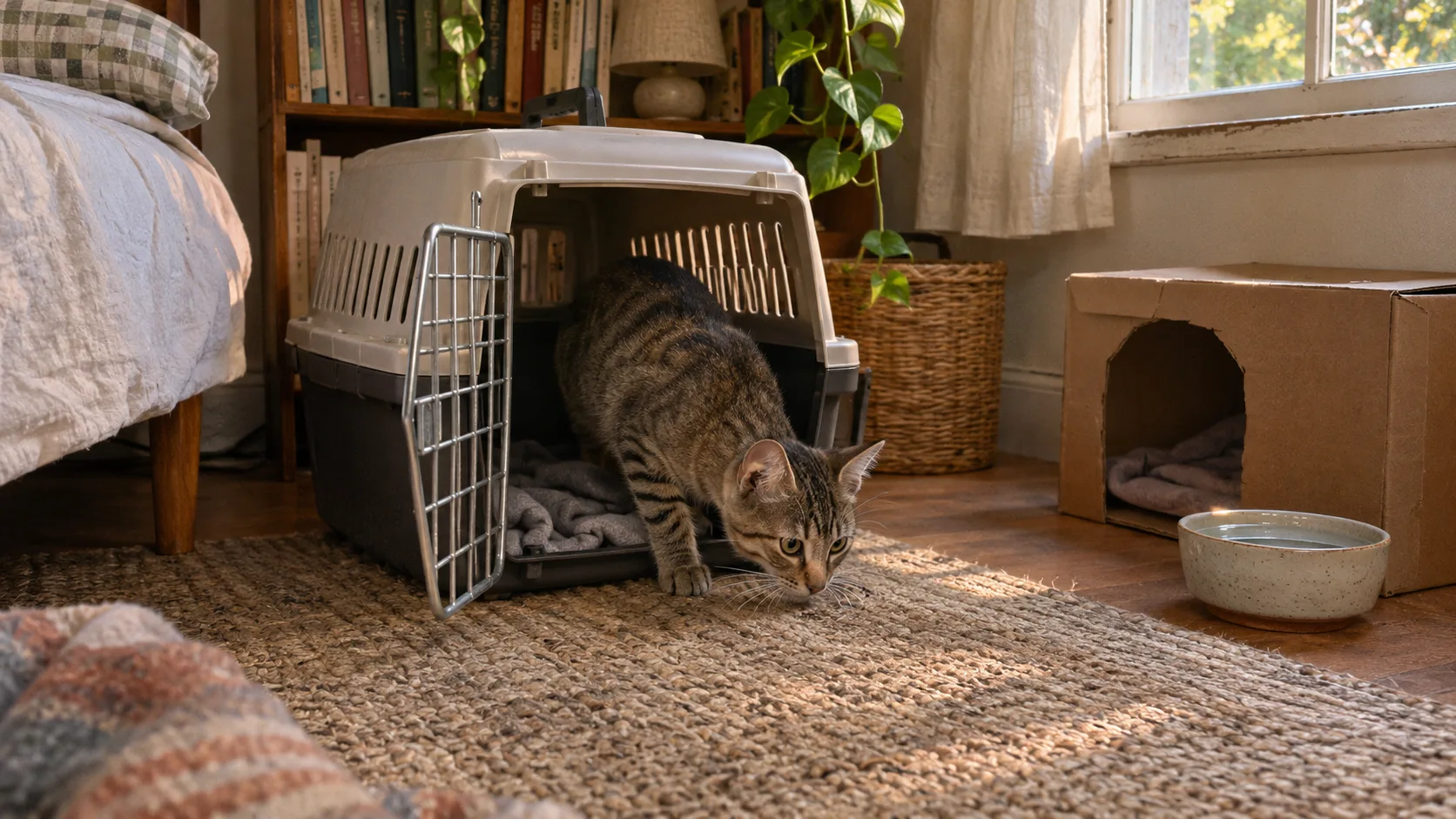
New Arrival
First Day Home
Everything is new today, for both of you.
Health Signal
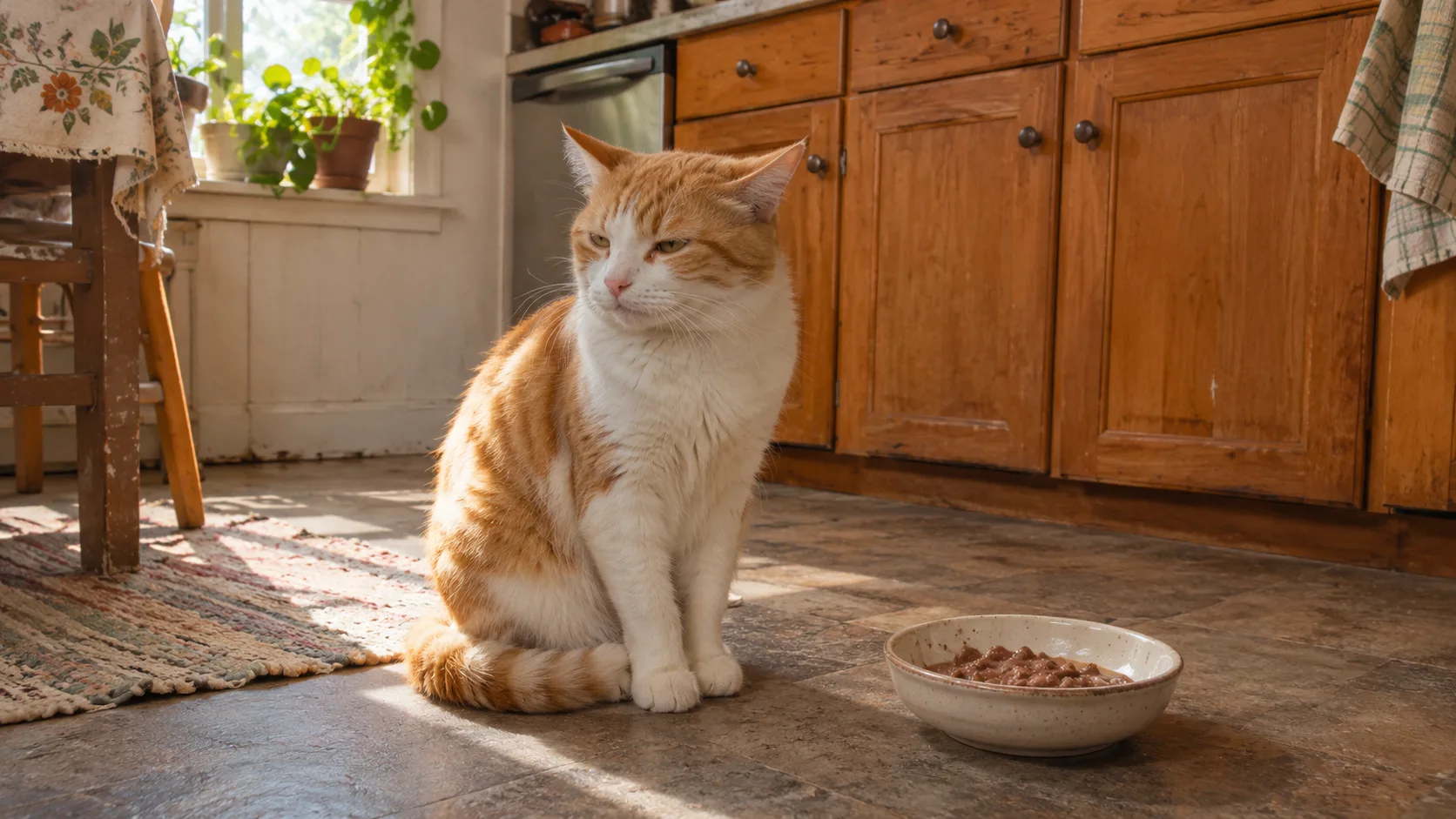
Suddenly Not Eating
Same bowl as yesterday. Today they walked right past it.

Workdays & Travel
Leaving Home
A suitcase by the door, and a pair of eyes watching every trip to the closet.
Senior Care
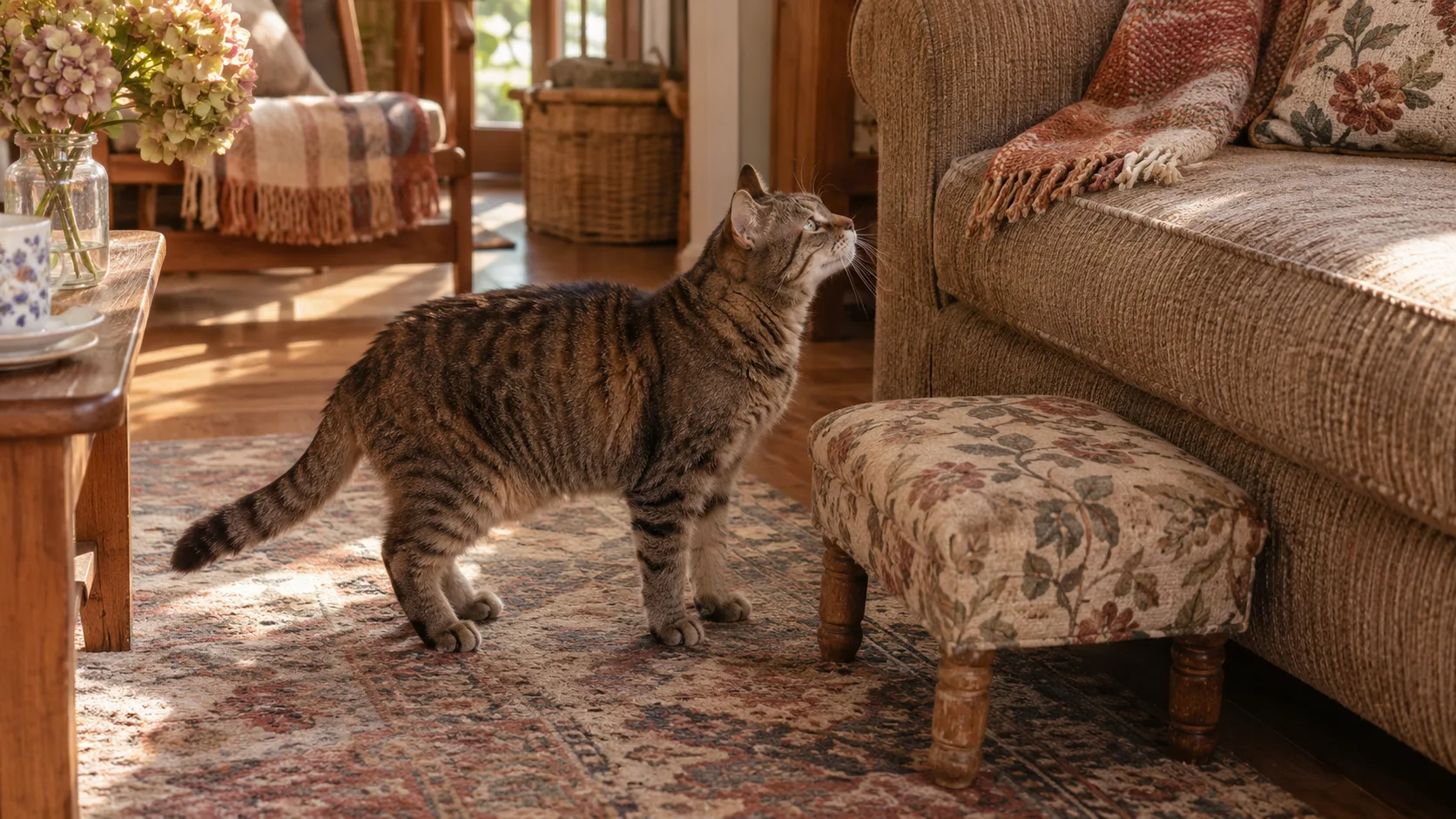
Aging Together
A half-second pause before the jump they used to make in their sleep.