Is My Senior Cat Just Lazy, or Is It Chronic Pain?
Direct Answer
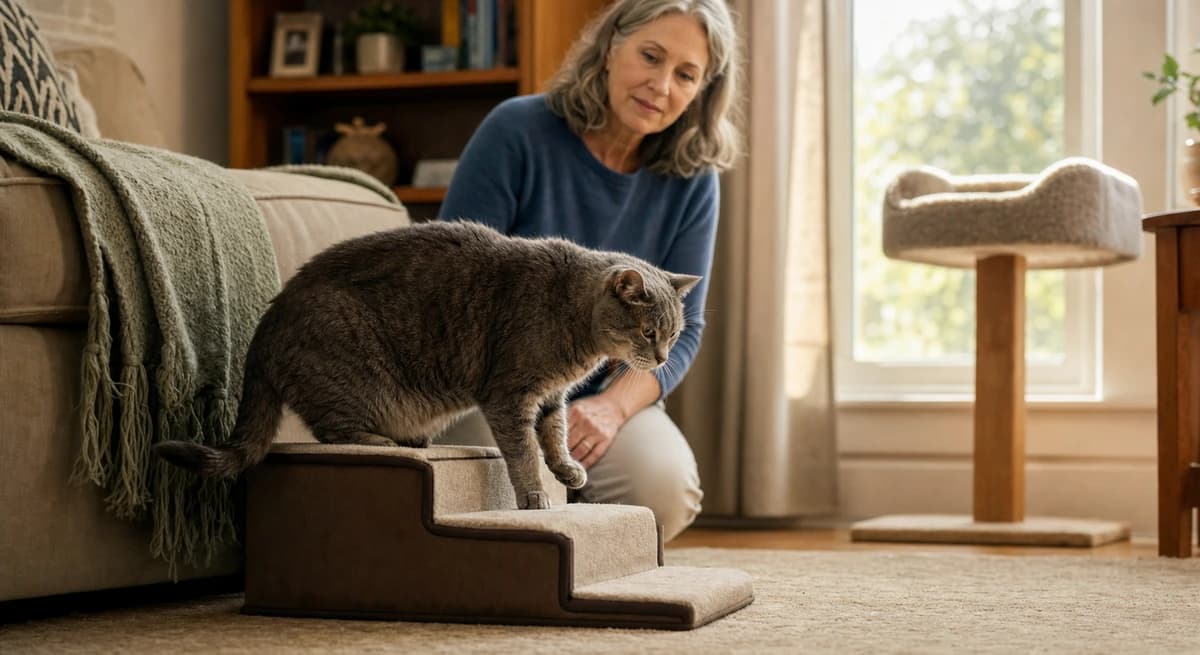
A senior cat who becomes less active, avoids jumping, grooms less, sleeps in lower places, or reacts badly to touch may be showing signs of chronic pain. Arthritis, dental pain, muscle loss, and other age-related conditions often appear as small routine changes instead of obvious crying or limping. The safest home approach is to record 14 days of appetite, mobility, grooming, litter box use, sleep location, and touch sensitivity, then share that pattern with a veterinarian.
Chronic pain is easy to miss because it shrinks a cat’s life slowly. The cat may stop visiting the windowsill, stop playing, avoid stairs, or choose lower sleeping spots. To an owner who sees the cat every day, the change can look like normal aging.
Why Chronic Pain Is Hard to Spot in Cats
Cats often reduce movement before they show dramatic pain behavior. They may still eat, purr, and seek attention while avoiding specific actions that hurt. That is why behavior change is the useful early signal.
In Catellect’s behavior taxonomy, chronic-pain-adjacent signals include limping, grooming_neglect, restless_sleep, sudden_aggression, and litter_avoidance. One signal can have many causes. A cluster that persists is more actionable.
Daily Signs of Pain in Senior Cats
| Behavior change | Possible meaning | What to record |
|---|---|---|
| Hesitates before jumping | Joint, muscle, paw, or back discomfort | Jump height, failed jumps, detours |
| Sleeps in lower places | Avoiding climbs or falls | Old sleep spot vs. new sleep spot |
| Grooms less | Pain reaching the back, hips, or tail base | Mats, oily fur, dandruff, dirty rear area |
| Misses the litter box | Pain entering the box or urinary/GI discomfort | Box height, posture, urine or stool changes |
| Reacts to petting | Pain in a specific body area | Location touched, reaction intensity |
| Plays less | Reduced mobility or discomfort | Toy interest, chase time, stopping point |
The pattern matters more than any one row. A cat who stops jumping and also grooms less is sending a stronger signal than a cat who has one quiet day.
Quiet Does Not Always Mean Comfortable
Painful cats can look calm. The difference is context. A comfortable senior cat usually keeps predictable appetite, social contact, grooming, and litter habits. A painful senior cat may become quiet while also avoiding jumps, sleeping in unusual places, reacting to touch, or losing interest in play.
Owners often describe this as “he got old overnight.” In many cases, the useful question is: which activities disappeared first?
A 14-Day Home Pain Log
Use this simple tracking routine before a non-emergency vet visit:
- Record appetite, water intake, urination, defecation, sleep location, jumping behavior, and interaction once per day.
- Film two 30-second clips each week: walking across the room and getting on or off a couch.
- List actions your cat used to do but now avoids.
- Note sudden aggression, hiding, vocal changes, or new sensitivity to being brushed or picked up.
- Bring the log and videos to your veterinarian so the visit starts with evidence.
“Old Age” vs. Possible Pain
| Pattern | More consistent with routine aging | More concerning for pain |
|---|---|---|
| Activity | Gradual slowing with stable habits | Avoids specific jumps, stairs, or surfaces |
| Grooming | Slightly less frequent grooming | Mats near hips, tail base, or back |
| Touch | Still accepts usual handling | Pulls away, growls, bites, or tenses |
| Litter box | Stable location and posture | Hesitation, accidents, high-sided box avoidance |
| Mood | Predictable personality | New irritability, hiding, or reduced interaction |
A senior cat can age and hurt at the same time. The goal is to notice treatable discomfort early.
How Catellect Helps Track Senior Cat Pain Patterns
Senior cat pain is usually a pattern problem. A cat with arthritis may still eat breakfast, purr on the couch, and look calm, while slowly avoiding the movements that hurt: jumping onto the bed, climbing to a favorite window, grooming the hips, or stepping into a high-sided litter box. Catellect is designed to help owners see those small changes sooner by comparing a cat against their own baseline.
For an older cat, useful signals include activity radius, favorite resting spots, jumping frequency, litter box timing, grooming-related changes, sleep rhythm, and response to touch or play. One quiet afternoon means very little. A two-week drift in movement, grooming, litter behavior, and social interaction tells a clearer story.
That kind of record also makes a vet visit more productive. Instead of saying “my old cat seems lazy,” an owner can bring specifics: fewer jumps to the couch, longer hesitation before stairs, more time sleeping on the floor, new mats near the hips, or litter box accidents after years of normal use. Catellect’s role is to turn everyday behavior into a cleaner timeline that helps owners notice senior cat pain signs and discuss them with a veterinarian earlier.
References
- Feline chronic pain management: the importance of a team approach for optimal outcomes: https://pmc.ncbi.nlm.nih.gov/articles/PMC12605920/
- Implementation of a prospective in-clinic validated Feline Osteoarthritis Checklist: https://pmc.ncbi.nlm.nih.gov/articles/PMC12535645/
- Pain behaviors before and after treatment of oral disease in cats using video assessment: https://pmc.ncbi.nlm.nih.gov/articles/PMC7146962/
- Safety assessment of frunevetmab for osteoarthritis pain in cats: https://pmc.ncbi.nlm.nih.gov/articles/PMC12893208/
FAQ
Is a senior cat who stops jumping always in pain?
A senior cat who stops jumping deserves closer observation. Joint pain, weakness, vision changes, fear of falling, and illness can all change jumping behavior.
What should I film for my vet?
Film your cat walking, turning, using stairs if they normally do, and getting on or off a couch. Short clips in normal home lighting are enough.
Why does Catellect focus on baseline changes?
Each cat has a different normal. A change from that individual normal is often more useful than comparing the cat with a generic senior-cat checklist.
Related reading: