Smart Cat Collars: Gimmick or Game-Changer? An Honest Review
"I used Whistle for about 10 years and honestly it was awesome — it even saved my boy's life a couple times. Found him before he reached the highway. The GPS accuracy was great, the snap-on collar attachment was perfect, and the hardware was small, light, and super easy to take on/off. The app worked great too... then they got acquired and everything fell apart." — r/tractivegps user (score: 9, 18 comments)
"This TRACTIVE device ISN'T it! The safe zone is WAY TOO BIG for my house/yard. I did not get alerted when my dog 'visited' my neighbor. I have been going back and forth with Tractive via email, BECAUSE THEY DO NOT HAVE PHONE SUPPORT." — r/tractivegps user (score: 11, 9 comments)
Two honest testimonials. One from a long-time user who saw the category at its best. One from a frustrated buyer who encountered it at its worst.
Smart pet collars occupy one of the most complicated spaces in the consumer tech market: products where the marketing is aspirational, the use case is genuinely important, and the execution ranges from life-saving to infuriating. After analyzing 439 posts and 3,631 comments from real users, here's what we actually know.
What Smart Cat Collars Are (And Aren't)
Let's define the category clearly, because "smart collar" means different things:
GPS/Location trackers: Devices that transmit your cat's location using cellular networks, GPS satellites, and sometimes Bluetooth. Primary use case: finding a lost cat.
Activity monitors: Devices that track movement, steps, rest periods, and sleep quality. Primary use case: health monitoring and behavioral baseline.
Combined systems: Products that integrate location tracking with health/activity monitoring — the more comprehensive (and expensive) category.
Home-only monitoring: Systems that don't track outdoor GPS location but monitor your cat's behavior within the home — often combining smart collars with base station cameras and AI analysis.
Most products currently marketed as "smart collars" are primarily GPS trackers with basic activity features bolted on. The genuinely comprehensive category — where the primary value proposition is behavioral health intelligence, not just location — is newer and less crowded.
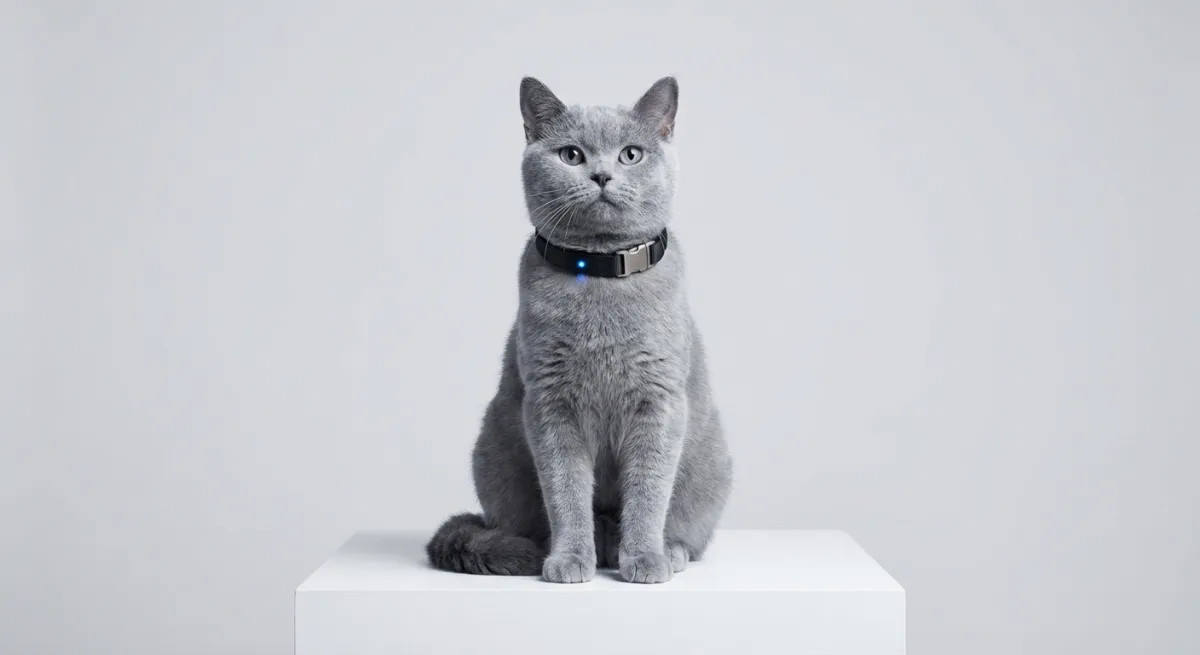
The Case FOR Smart Cat Collars: Real Evidence
Evidence #1: They Genuinely Save Lives
This is not marketing. From our dataset:
"Tractive may very well have saved my dog's life this morning. My dog decided to venture much further than [her] hers, and thank God his collar alerted me and I was able to give his location to animal control and they were able to find him." (Score: 51, comments: 9 — one of the highest-rated posts in the dataset)
The escape-and-recovery use case has documented successes. In multiple posts in our dataset, GPS trackers enabled owners to locate missing pets within hours, preventing outcomes that range from traffic death to coyote attacks to simple extended stress for both cat and owner.
For indoor-outdoor cats — and for indoor cats in households where windows and doors are frequently open — this life-safety function is real.
Evidence #2: Activity Data Correlates with Health Events
The health monitoring function is the most underappreciated feature in the category. Several users in our dataset specifically mention that activity pattern changes preceded visible illness symptoms:
"Is Tractive Care worth it? My cat's activity dropped significantly before he started showing any symptoms. The vet said catching it early made a real difference."
This aligns with what veterinarians have long known: behavioral and activity changes are often the earliest detectable sign of systemic illness in cats. A smart collar that captures these changes continuously creates a data advantage that periodic owner observation cannot match.
Evidence #3: Peace of Mind Has Real Value
Data quantifying the human psychological benefit of monitoring technology is difficult to capture in Reddit posts — but the sentiment is consistent and clear:
"I live in the suburbs near some local parks and wilderness. I have a small yard that's easy to bypass, even with fencing all around it. [The GPS tracker] gives me peace of mind when I'm not home."
For people with significant anxiety about their pet's safety — especially those who've had a close call before, or who live near busy roads — the emotional value of knowing their cat is home and safe is genuinely meaningful. This isn't nothing.
The Case AGAINST (Or At Least: The Honest Limitations)
Problem #1: Accuracy That Fails in Urban Environments
GPS is a line-of-sight technology that requires clear satellite signal. In dense urban environments — exactly where the majority of our target audience lives — accuracy degrades:
"I bought the Tractive Cat mini so I could have some peace of mind but it will tell me my cat is in a no go zone when he clearly isn't."
"We live on a farm in a small valley. I've been incredibly disappointed in the accuracy of the data."
GPS drift — where the device shows your cat in a location they're not in — is a consistent complaint. In large yards or rural environments, 20-30 meters of inaccuracy is tolerable. In an apartment building or dense neighborhood, it makes the device nearly useless for fine-grained location.
Reality check: If you live in a dense urban area and your cat is primarily indoors, a pure GPS tracker will frustrate you. Multi-technology positioning (GPS + cellular + WiFi + BLE) is the only approach that works reliably across all environments.
Problem #2: Collars That Fall Off
Cats are extraordinarily good at removing things they don't want to wear. And cat anatomy creates a design challenge: narrow heads relative to necks, flexible bodies, and a lifelong commitment to squeezing through tight spaces.
"My cat returned without the tracker on his collar. Yet another of the holders has cracked and the GPS fell off."
"My cat lost her collar her GPS once again. What do I do?"
The collar loss problem appears in 51 separate complaint threads in our dataset related to comfort and fit. It's the second most common hardware complaint after accuracy.
The underlying issue: most GPS trackers were designed for dogs (and specifically large dogs) and adapted for cat use. Cat-native design — lightweight, low-profile, purpose-built for feline anatomy with secure but safe breakaway mechanisms — is genuinely rare in the current market.
Problem #3: Battery Life vs. Functionality Trade-off
Smart collars consume significant power. The battery life vs. tracking frequency trade-off is real and affects every product in the category:
"Need to recharge the tracker on a daily basis."
In "live tracking" mode (updates every 2-3 seconds), most trackers last 1-5 hours. In "power saving" mode (updates every 2-5 minutes), battery life extends to 5-10 days. In a hypothetical "home detection only" mode (not live GPS tracking), battery could last weeks.
The problem: you need live tracking most exactly when you need it most — when your cat is actively missing and every second counts. That's when the battery dies fastest.
Intelligent adaptive power management — where the collar knows when the cat is home and uses low-power home detection, then switches to live GPS automatically when a zone exit is detected — is the right solution. Some products approximate this; none do it perfectly yet.
Problem #4: The Subscription Cost Reality
"Never mind the crazy subscription cost and hidden fees for everything."
"I don't even want to keep it because if they lie about [pricing], what else am I gonna get roped into?"
GPS tracking requires cellular data networks. That costs money. But the way subscription costs have been structured in the pet tracker market — opaque initial pricing, fees for features that were previously included, high monthly costs with limited annual discount — has generated significant resentment.
A realistic TCO (Total Cost of Ownership) calculation for a GPS tracker:
- Hardware: $80-150
- Subscription: $5-15/month × 36 months = $180-540
- 3-year total: $260-690
For a product whose primary value is emergency use that may occur 0-2 times in that period, the value equation is difficult for some buyers.
Problem #5: The System Fails in Moments of Crisis
"I rely on this system to keep my dog safe, but when it truly mattered, it failed in every possible way... I was brought to my knees crying for hours."
Technology products fail. That's a fact. But failure modes in pet safety products have outsized emotional consequences. When your cat is missing and the app crashes, or the GPS won't lock, or the cellular coverage is spotty in exactly the area your cat wandered to — that failure is devastating.
The category hasn't yet achieved the reliability standard that life-safety applications demand. That's a real limitation, not a minor inconvenience.
Evaluation Framework: What to Look For
Based on the user data, here's a decision framework for evaluating any smart cat collar:
For GPS/Safety Tracking Priority:
- ✅ Multi-technology positioning (GPS + cellular + WiFi)
- ✅ Fast GPS lock time (<60 seconds)
- ✅ Smart zone detection with automatic mode switching
- ✅ Battery life >7 days in normal use
- ✅ Strong cellular network coverage in your specific area
- ✅ Reliable app with offline last-known-location
- ✅ Responsive customer support
For Health Monitoring Priority:
- ✅ Continuous activity and rest tracking (not just step counts)
- ✅ Behavioral baseline building over time
- ✅ AI-powered anomaly detection (not just raw data)
- ✅ Integration with vet-shareable health reports
- ✅ Sleep quality monitoring
- ✅ Trend visualization (not just daily snapshots)
For Wearability (Non-Negotiable for Cats):
- ✅ Weight under 15 grams (ideally under 10g for small cats)
- ✅ Low profile — doesn't add significant height above collar
- ✅ Designed for cats specifically, not adapted from dog products
- ✅ Compatible with safety breakaway collar
- ✅ Waterproof to at least IPX7
For Value:
- ✅ Transparent, straightforward subscription pricing
- ✅ Annual plan option at meaningful discount
- ✅ No hidden fees for core features
- ✅ Hardware replacement/warranty policy
The Verdict: Worth It for the Right Use Case
Smart cat collars are not a gimmick. The best use cases — safety tracking for indoor-outdoor cats, health monitoring for cats prone to illness, peace of mind for anxiety-prone owners — have genuine, documented value.
They are also not yet perfected. The current generation of products has real limitations in urban accuracy, cat-specific design, battery management, and reliability. Buyers who go in expecting seamless, always-on safety will sometimes be disappointed.
Our honest recommendation:
For indoor-outdoor cats in lower-density environments: A GPS tracker with a good cellular network is worth considering, with realistic expectations about accuracy and battery management.
For indoor-only cats: GPS tracking adds limited value. Focus on health/activity monitoring, which provides meaningful early detection capability. A home-based monitoring system (smart collar + base camera + behavioral AI) offers more relevant value than outdoor GPS tracking.
For owners primarily concerned about health monitoring: The category is evolving. The most interesting new products are built around continuous behavioral baseline tracking — not just location — and that's where the health intelligence gap is being addressed.
The Next Generation: What We're Building
At Catellect, we've spent months analyzing exactly this data — the frustrations, the failure modes, and the genuine successes — to understand what a smart cat monitoring system needs to do to actually be useful.
Our conclusion: the most important feature set isn't outdoor GPS (which is genuinely hard for urban indoor cats) — it's continuous behavioral intelligence at home, where cats spend 95%+ of their lives.
Catellect's system combines:
- A lightweight smart collar designed for cat anatomy
- A home base station with AI-powered camera monitoring
- Behavioral baseline building and anomaly detection
- Location awareness (both at home and outdoor)
- A companion app that surfaces actionable insights, not just raw data
We're not launching yet — we're in pre-launch, building carefully. We'd rather be right than fast.
If you want a smarter way to monitor your cat — join our waitlist. Founding members get early access, priority pricing, and a say in how we build.
👉 Join the Catellect Waitlist at catellect.com
Related reading: